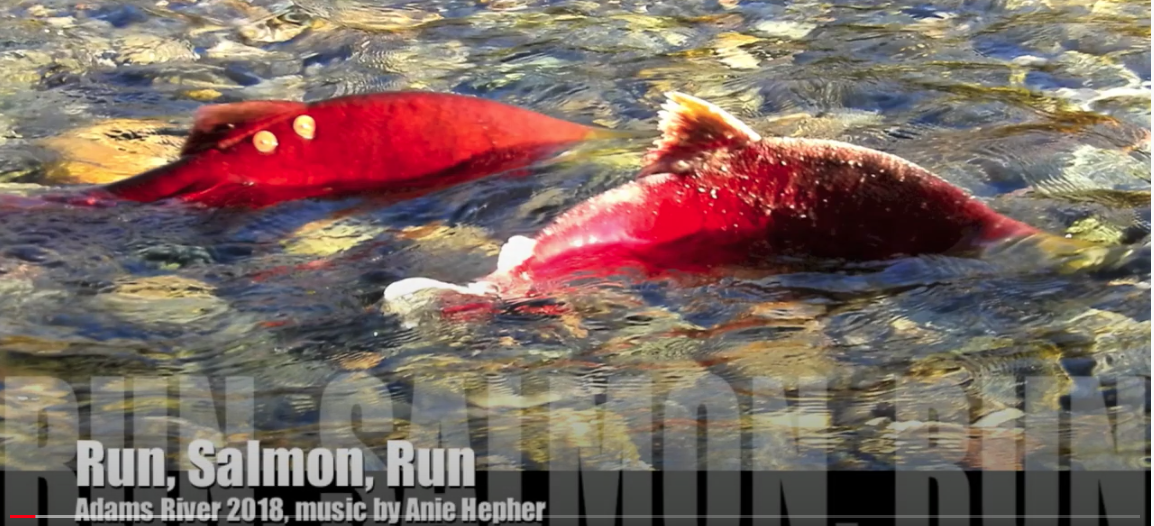
Given its importance to the Fraser River salmon fishery, the Adams River has been the focus for restoration efforts in recent years. Since the massive dominant run in 2010, the numbers of sockeye returning to spawn have been significantly declining, due to a multitude of factors. Impacts of fish farms, overfishing, competition from Alaskan hatchery fish, the warming ocean and habitat degradation have all contributed to the decline.
Fortunately, the federal government is putting an end to fish farms and with over 40 percent of them gone now including those located along the sockeye migration route, last year’s Fraser River run was exceptional. Fisheries and Oceans Canada (DFO) estimated 196,000 sockeye returned to the Adams River in 2025, a significant increase from the 2021 brood year estimate of approximately 70,000 fish.
Rivers often move, especially the Adams River which has shifted north near the mouth over the last five years. Where the new viewing platform was built adjacent to one of the prime spawning channels, the river moved to the south reducing the flow of water to a trickle. Fisheries biologists report that 87 percent of the habitat was cut off killing many eggs. Consequently, emergency restoration was called for and in 2020, large excavators were used to reopen this channel and others.
Another major concern has been the decline in large woody debris in the river, which has also resulted in salmon habitat degradation. Without the debris, habitat complexity has decreased, there are insufficient numbers of pools and minimal riffles. This degradation has resulted in bank erosion, shallow water in channels, and larger substrates instead of the gravel needed for successful spawning and higher temperatures.
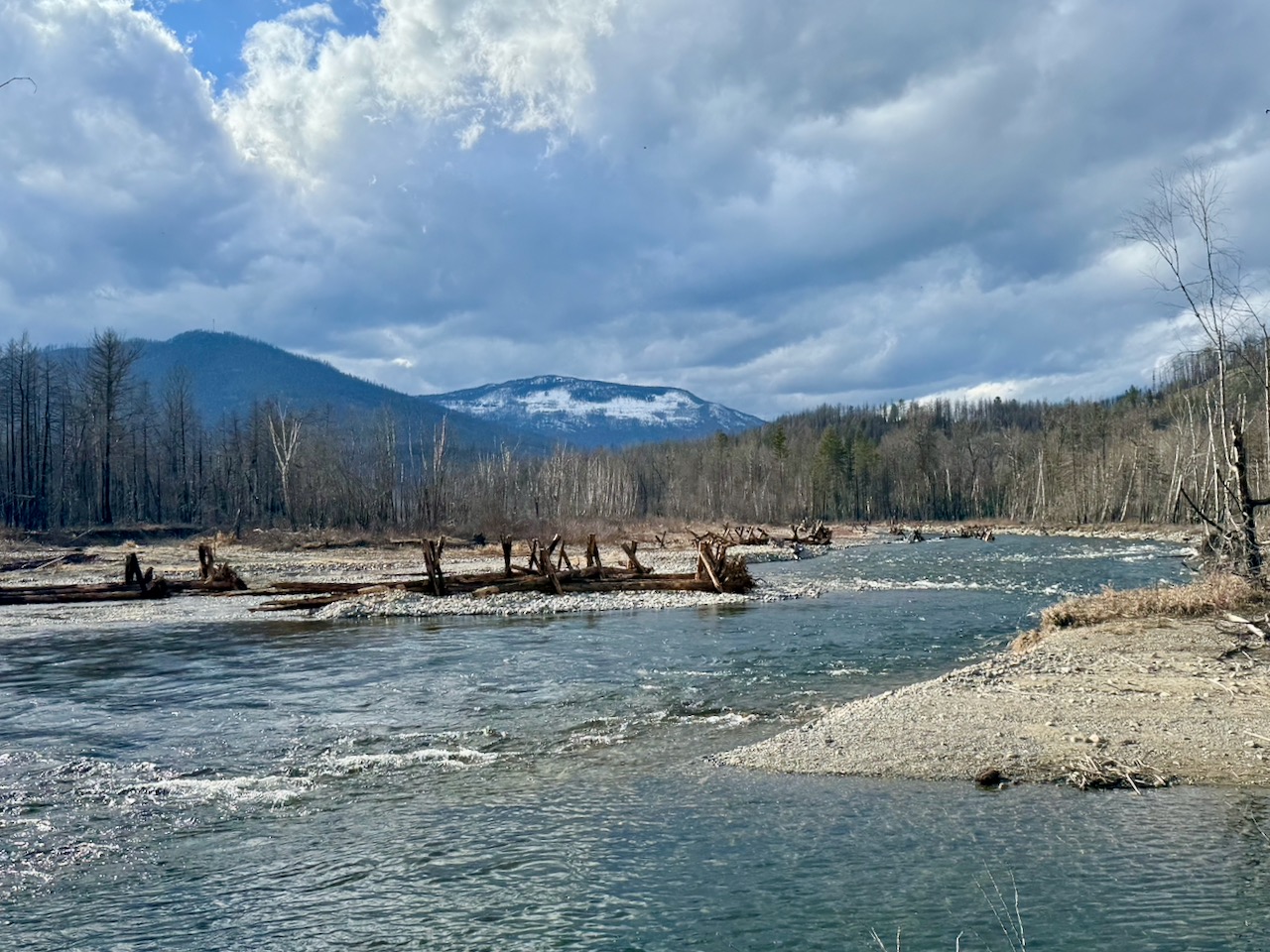
Consequently, the B.C. Salmon Restoration and Innovation Fund with 70 percent of the funding coming from the federal government and 30 percent from the province is being utilized to support a new Adams River restoration program to add large woody debris. In March, in collaboration with DFO and BC Parks, Skwlāx te Secwepemcúl̓ecw (SteS) completed Phase I of the new restoration project designed to counteract the structural starvation in the river and improve fluvial processes.
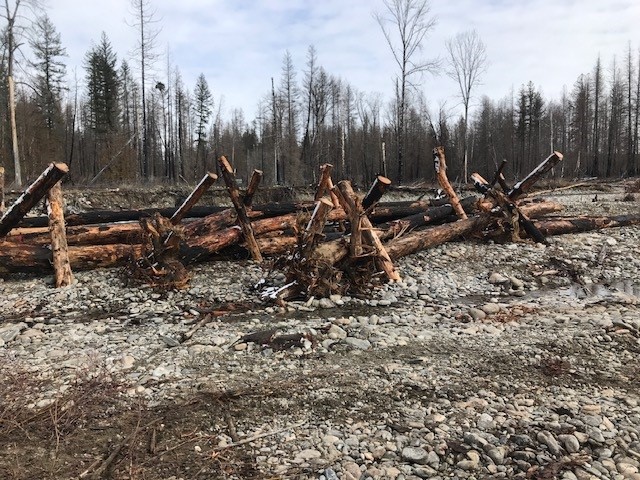
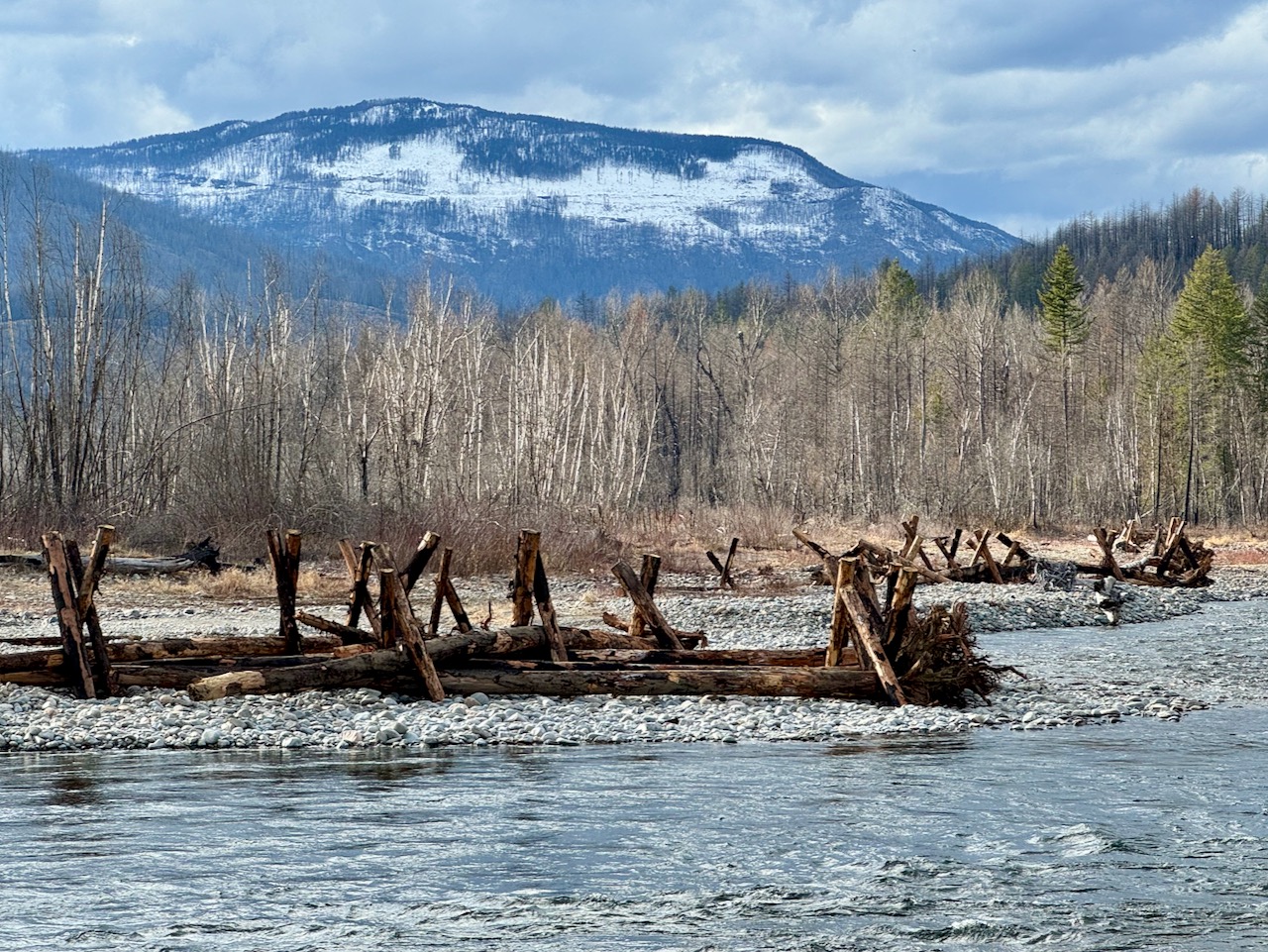
Skwlāx Resource Management worked with the SteS Guardians to install the first set of what eventually will be many large wooden structures (LWS) and smaller post assisted log structures (PALS) on the banks of the river. This work was completed during low flow when the banks were dry to minimize any interaction with the water. These structures are designed to mimic nature and allow for the water to pass above them during high water.
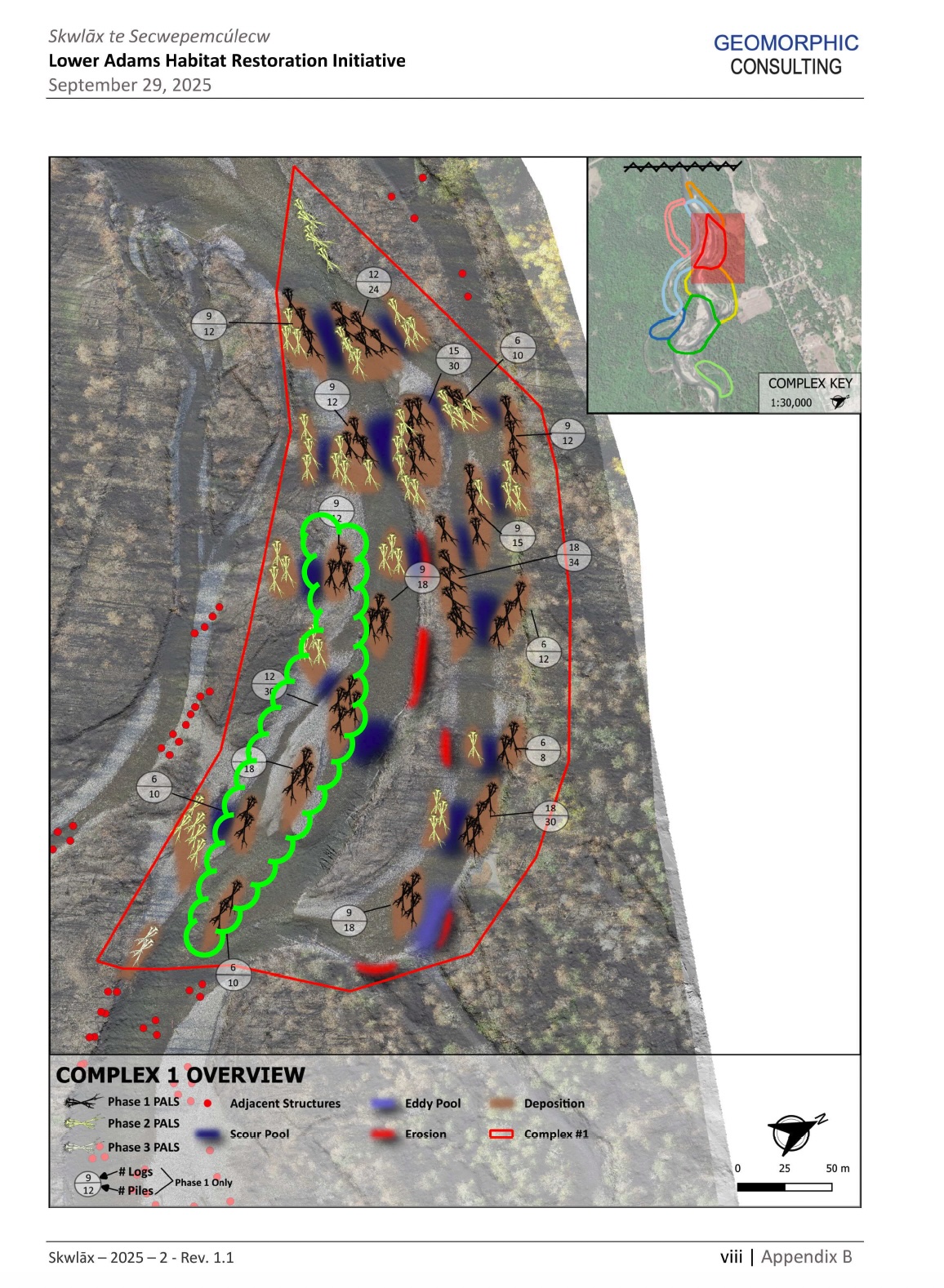
Individual PALS vary between 3 and 7 trees, 12 to 16 m in length with root wads and are anchored to the ground with angled wood posts, with one third of the trees buried. The LWS contain between 11 and 16 tree each and are secured with log piles. The goal is for these structures to improve habitat complexity and provide cover for fish, refugia for pre-spawn and juvenile salmon. As well, these structures will promote redistribution of river flows by creating multiple channels.
The overall objective of the proposed three phases of the project is to establish more vegetated islands, which over time will build resilience to the impacts caused by the 2023 devastating wildfire and future climate chaos impacts. Given that this year there will be a dominant salmon run on the river, this restoration work will help to ensure greater spawning success from what will hopefully be a larger return of sockeye than four years ago.
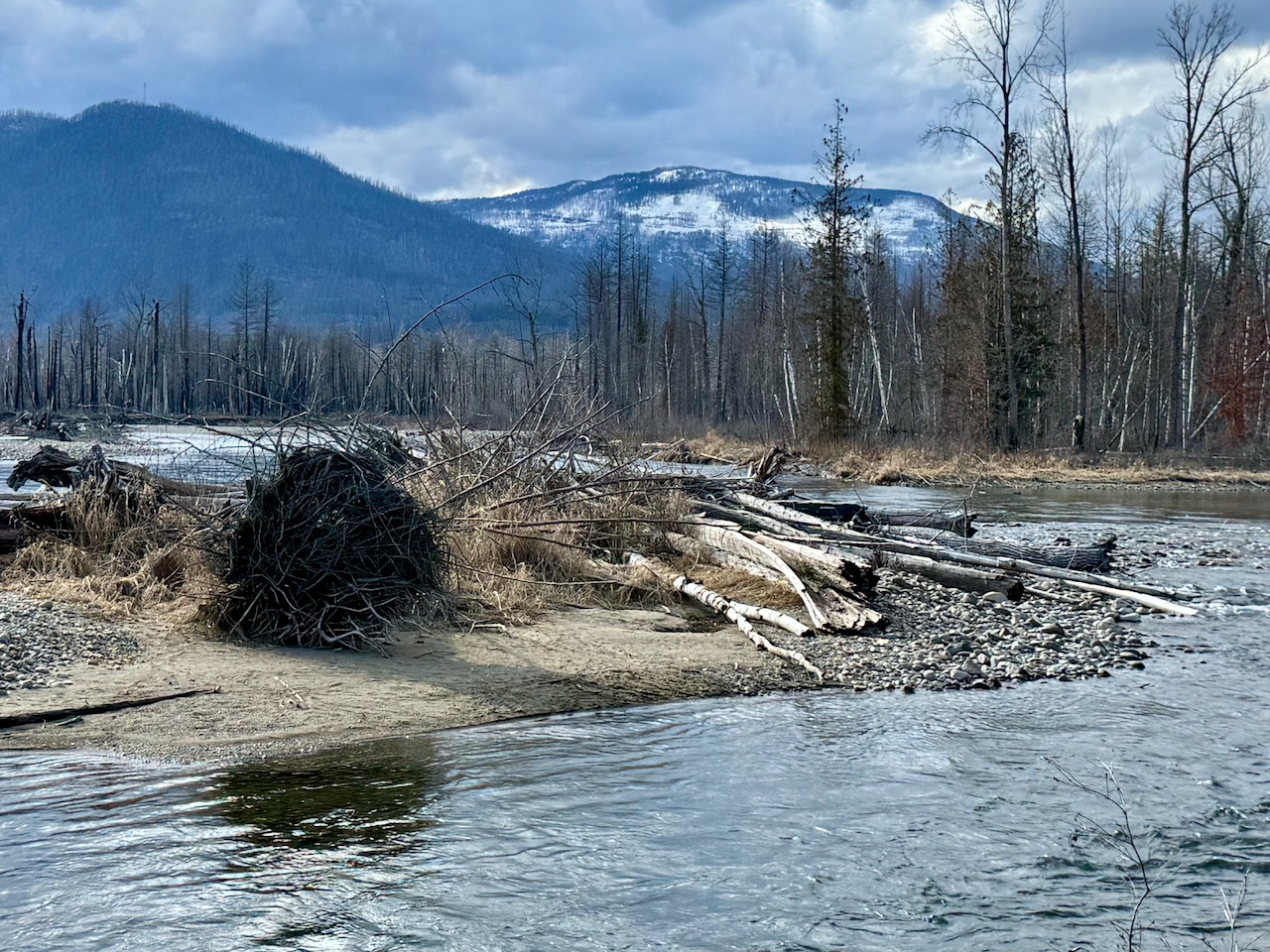
While the restoration of salmon habitat in the river proceeds, little has been done or will be done to restore the forested ecosystem destroyed by the wildfire. BC Parks has a mandate to let nature take its course, even though natural processes are rapidly changing as the planet heats up. Thankfully, DFO has a monitoring process in place to gauge the continuing impacts from the fire, which could multiply because the entire Nikwikwaia Creek watershed was reduced to ashes leaving it prone to landslides that could add sediment to the river.
POSTSCRIPT
Learn more about the shifting Adams River here – Adams River is on the move
Learn more about Adams River restoration here – Urgent Adams River Restoration Work to support Salmon Run
Latest update on the status of the park’s restoration: The bridge to the island is being repaired and that project is nearly complete. The windstorm on Monday, April 6th resulted in many of the dead trees falling across the trails. Hopefully, these will be removed soon. The fence blocking the trail to the gorge has been removed, but hikers and bikers are being told to use it at their own risk.