Brief North Shuswap History – Part II
North Shuswap homesteaders lived a rather isolated, subsistence lifestyle in the 1920s, as options for economic expansion were limited due in part to a world-wide recession and the collapse of the timber industry due to a lack of demand for lumber. Nonetheless there was a continued demand for railway ties and telephone poles, which were cut during the winter and hauled by horses to the lake to be picked up in the spring and boomed to Canoe.
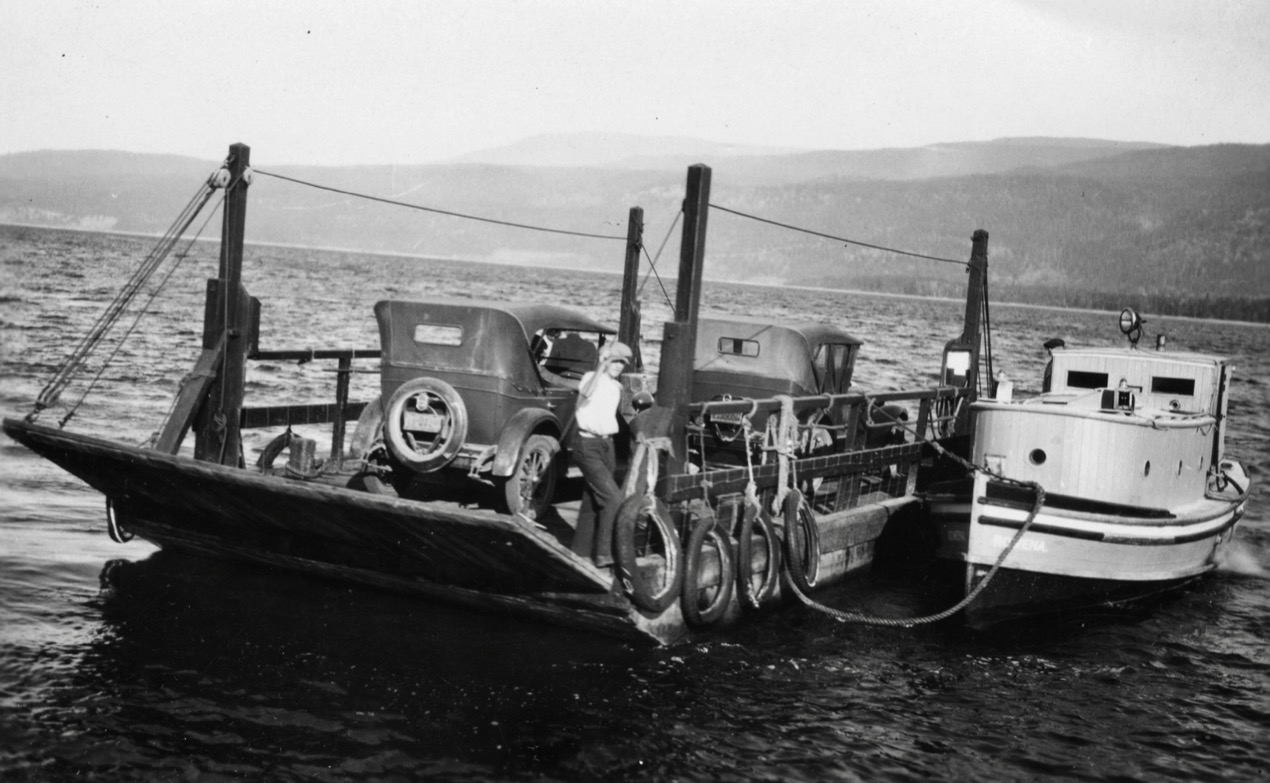
When the provincial government established the first ferry service between Scotch Creek and Sorrento in 1914, settlers accessed it via a rough road over Thompson Hill. It was a basic design, simply a platform built on two pontoons. Six years later, it was crushed by ice and had to be replaced by a passenger launch towing a scow. Ten years later, the government finally provided better service with a five-car ferry, which was replaced with a larger one in 1952 as traffic increased with eight roundtrips per day.
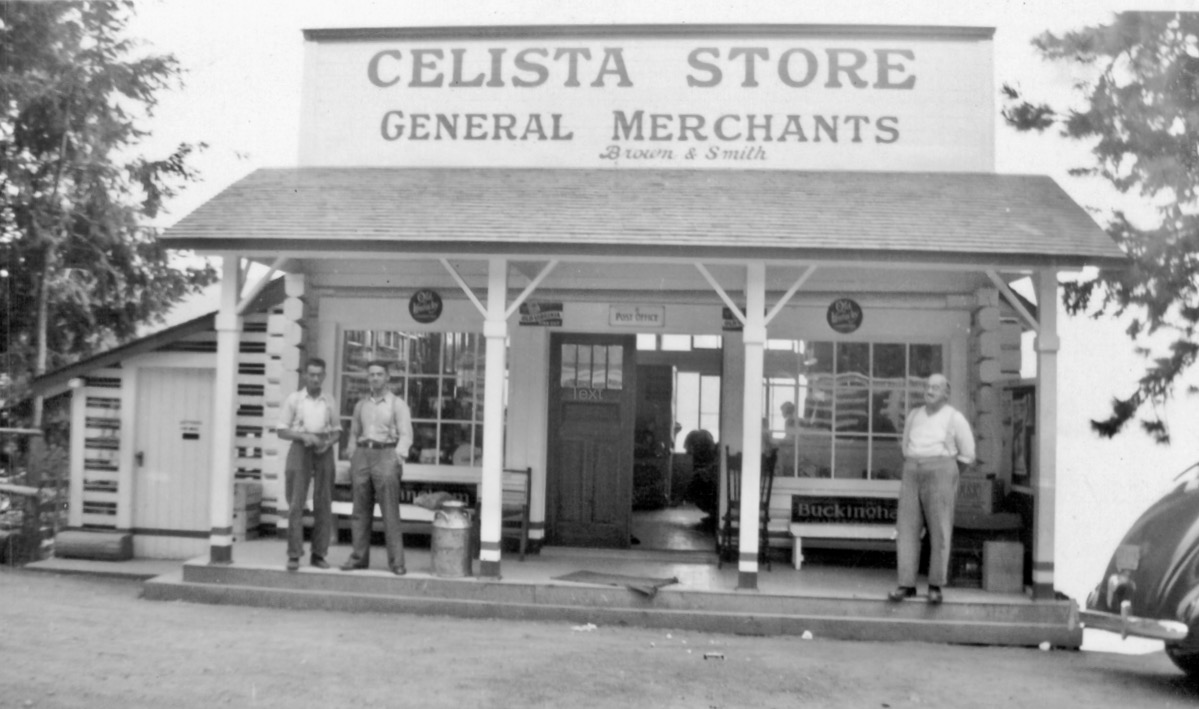
Initially settlers used their boats to obtain their supplies from Notch Hill and later from stores in Blind Bay and Sorrento, and at times, these stores would also deliver feed and groceries. It was not until 1919 that the first store operated out of a home in Magna Bay, where in 1928 an actual store was built closer to the lake. Also in the 1920s, the Brown and Smith log store was built in Celista, which included cold storage using ice blocks buried in sawdust. Joe Brown used the ferry to transport cream to Salmon Arm and brought back gas, oil, coal oil, feed and groceries back to the store.
Despite the pressure that North Shuswap residents had been giving the government to build a bridge over the Little River, where a small cable ferry had been operating since 1921, it was the demands of the timber industry that finally tipped the scales. Although the mill in Chase had ceased operations in 1925, loggers remained active at Adams Lake cutting ties and poles. When logging trucks came into service in the late 1920s, they were used to haul the poles to the Little River, because river drives on the Adams would often damage them.
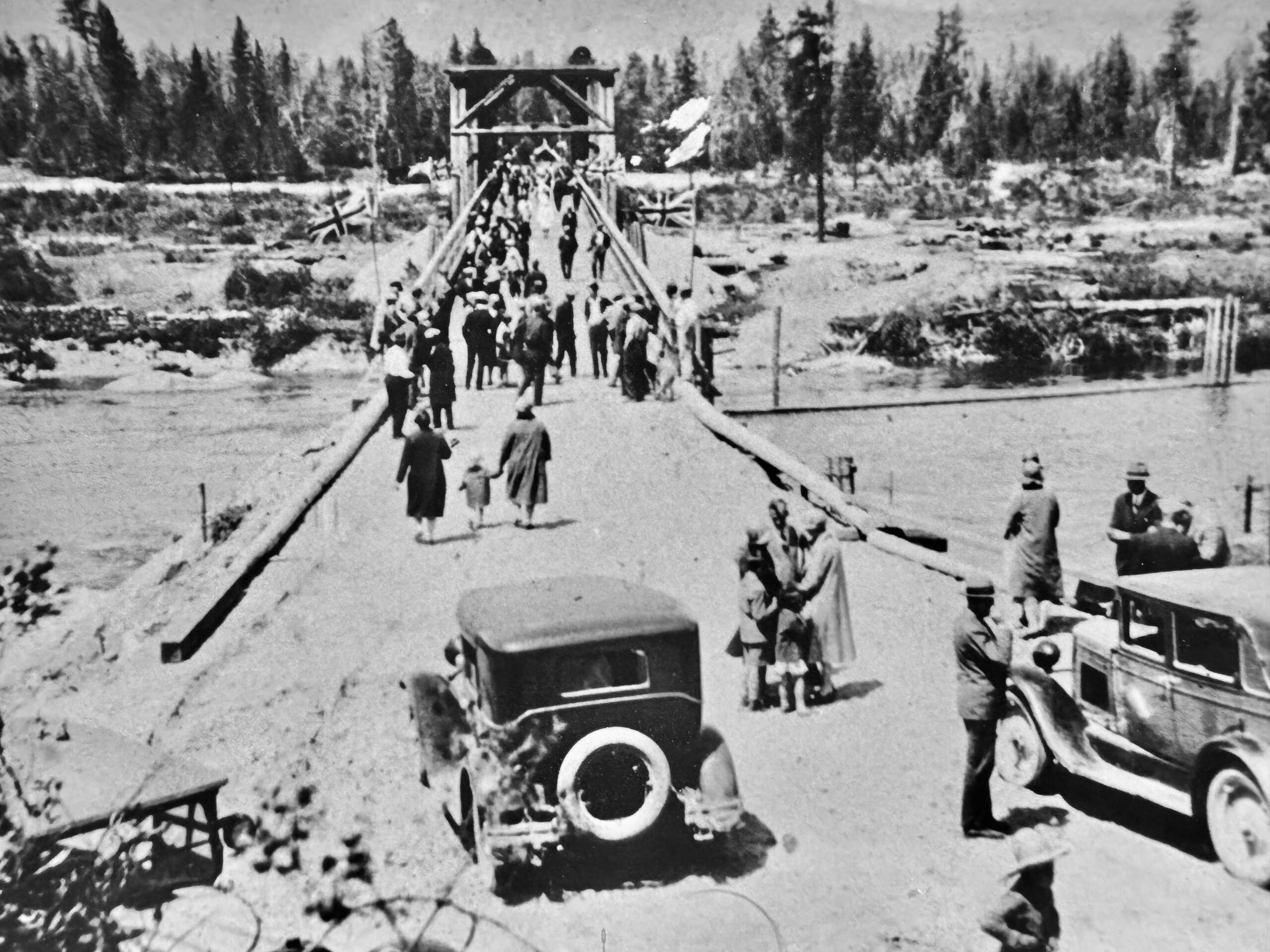
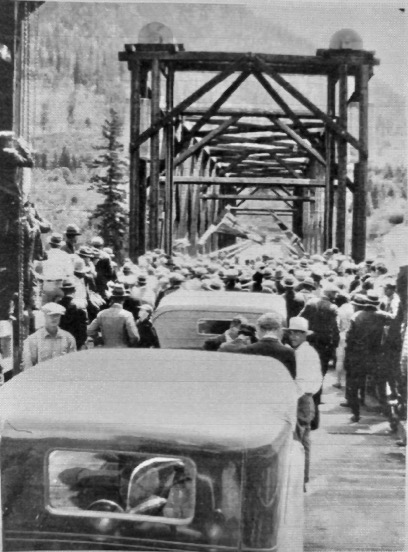
In 1929, the federal government swung into action and allocated $100,000 for the project. Two local sawmills provided materials for the temporary bridge and the short timbers and decking for the bridge, which included a lift span to allow passage for the government dredge and pile driver, plus the C.R. Lamb sternwheeler. It only took the 40-man crew nine months to build the Squilax Bridge, which opened on June 8, 1930.
Beginning after WWII, logging and sawmilling became a primary source of income for North Shuswap residents. By the late 1950s, there were upwards of two dozen small sawmills producing lumber and railroad ties and with the improved transportation, the rough lumber was trucked to re-manufacturing facilities for planing to create high value products. Without forklifts, these mill operators devised ingenious methods to load and unload their trucks.
While there was now good access to Adams Lake and Lee Creek, few cars could drive the often-muddy dirt road to Scotch Creek. It was not until 1956 that the road to Scotch Creek was improved, because it was then that the ferry service was discontinued.
Tourism, which is a mainstay of the North Shuswap economy today, began with the building of the Twin Cedars Lodge in 1947 by Charlie and Thelma Riesterer. The first guests arrived in 1948 and soon the log lodge and cabins became a popular place for tourists in the summer and hunters in the fall and winter.
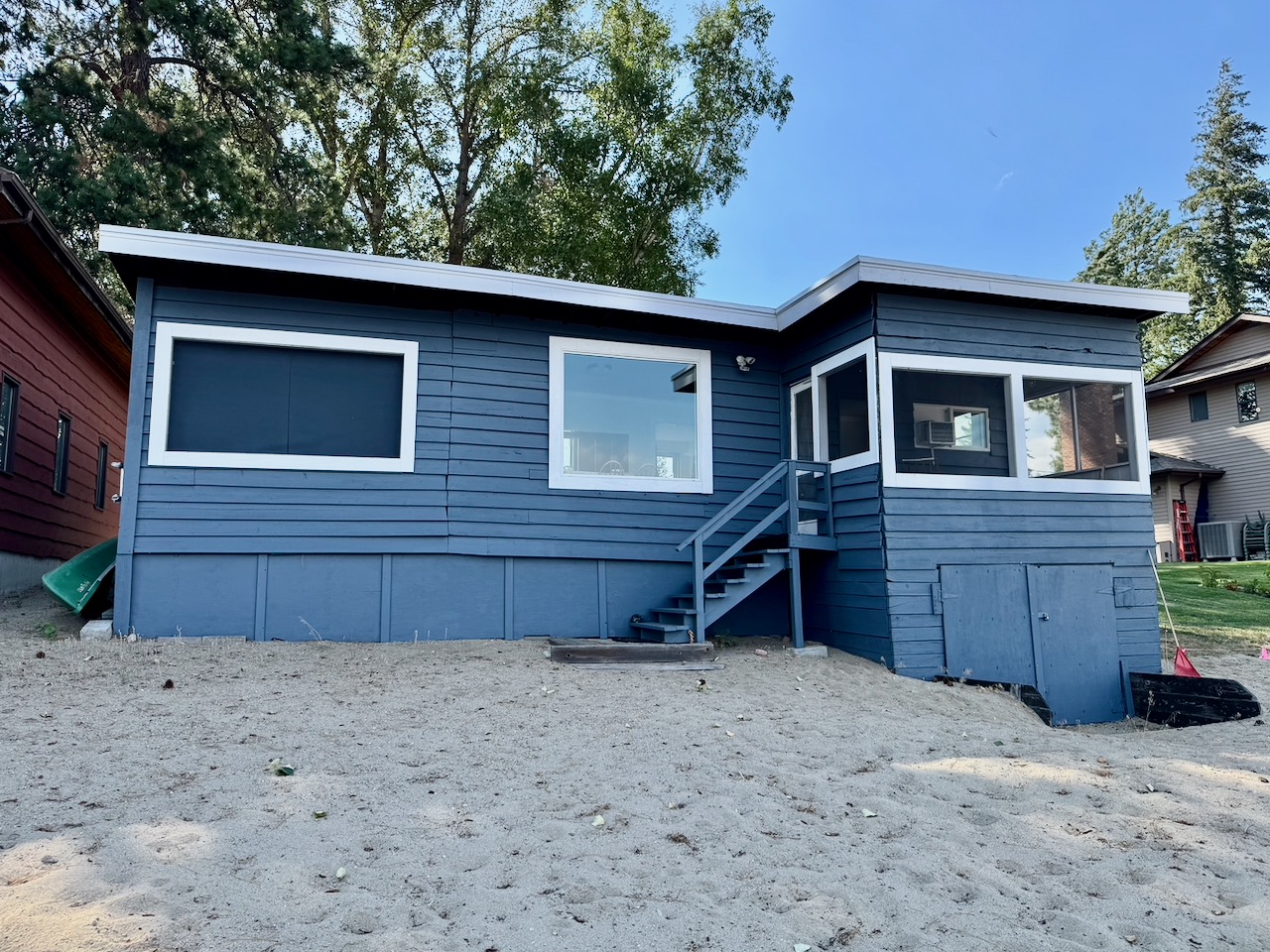
It was also in the late 1940s, that the first summer lakeshore cabins were built, often by families from Kamloops, when farmers subdivided off small lots and sold these for what would now be considered ridiculously low prices. After Shuswap Lake Provincial Park was established in 1956 on the old Barrie Clifford homestead and built in 1957, it became a major catalyst for tourism. A year later, Frank and Akiko Imai opened The Park Store and Cafe, which became legendary for their ice cream cones. In 1961, they sold the store and opened Frank’s Campground, which provided sites for the overflow from the park.
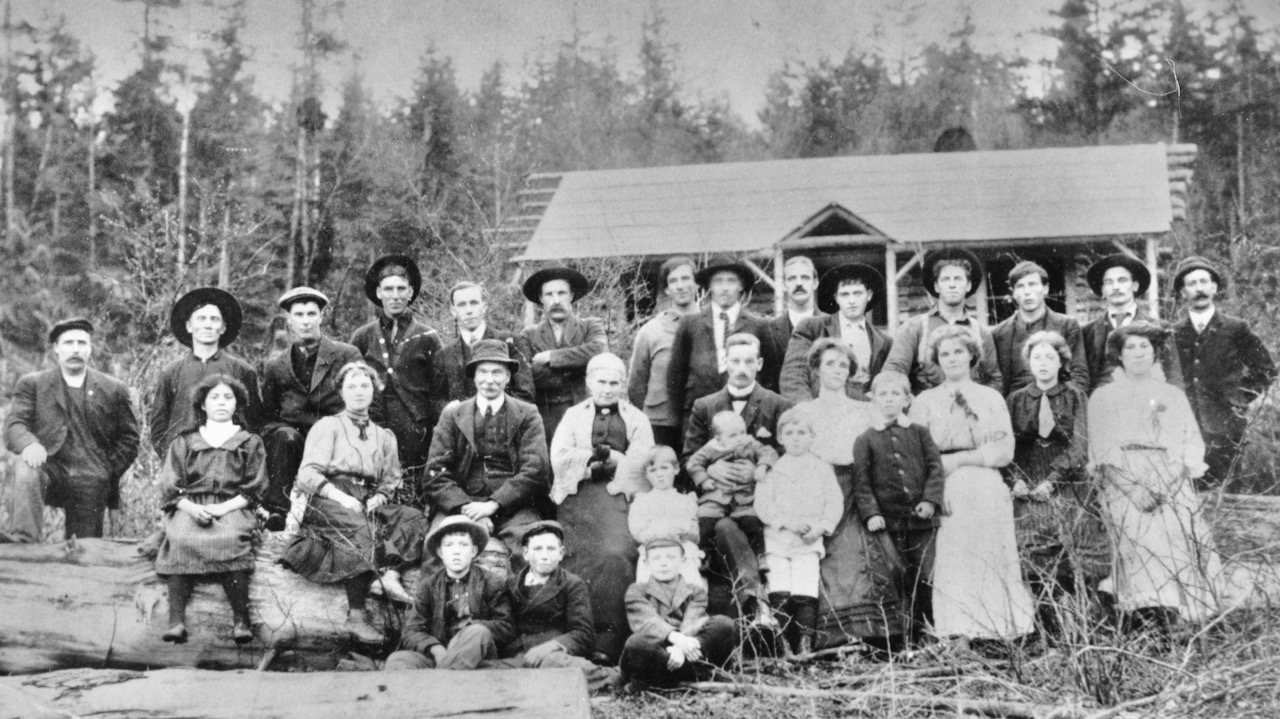
One rather remarkable feature of the North Shuswap is that so many descendants of the first European settlers are still living here today, many on the same properties their grandparents homesteaded. There are at least relatives from twelve original families living here and many of them help keep the memories of the early days of settlement alive, so that North Shuswap heritage remains vibrant.
POSTSCRIPT
The establishment of schools is another way to gauge the progress of settlement, as it is an indicator of the size of population. Harry Fowler initiated the building of the first school, which was located in Celista. It opened in 1911 with a class of 17 students and was called Shuswap North. The second school was located in Magna Bay in 1918 and initially classes were held first in an empty home and then in an a cabin. Settlers then built the school on donated land and it opened the following year. At 22 feet by 42 feet, it was the largest school and it soon became the centre for the community as it was used for many social functions. In 1932, an addition was built for a stage, dressing rooms and a kitchen. The Lee Creek school was built in 1919 on land donated by Oliver Freeman. The last school built was in Meadow Creek in 1925. It is interesting to note that the current and only North Shuswap school is located in Celista, where settlement began and where the first school was located, despite that the largest population is in Scotch Creek, which is also the commercial centre of the North Shuswap.