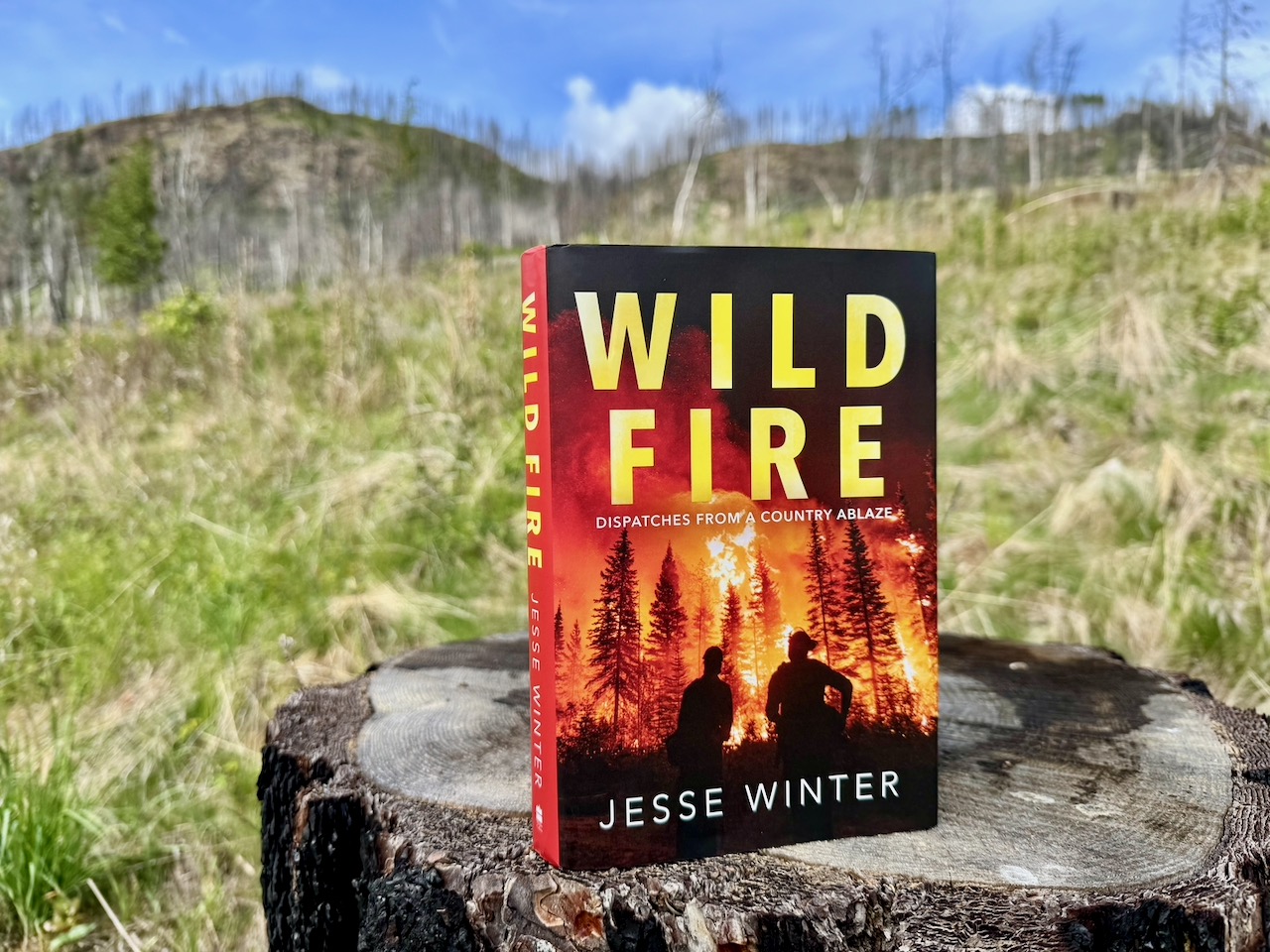
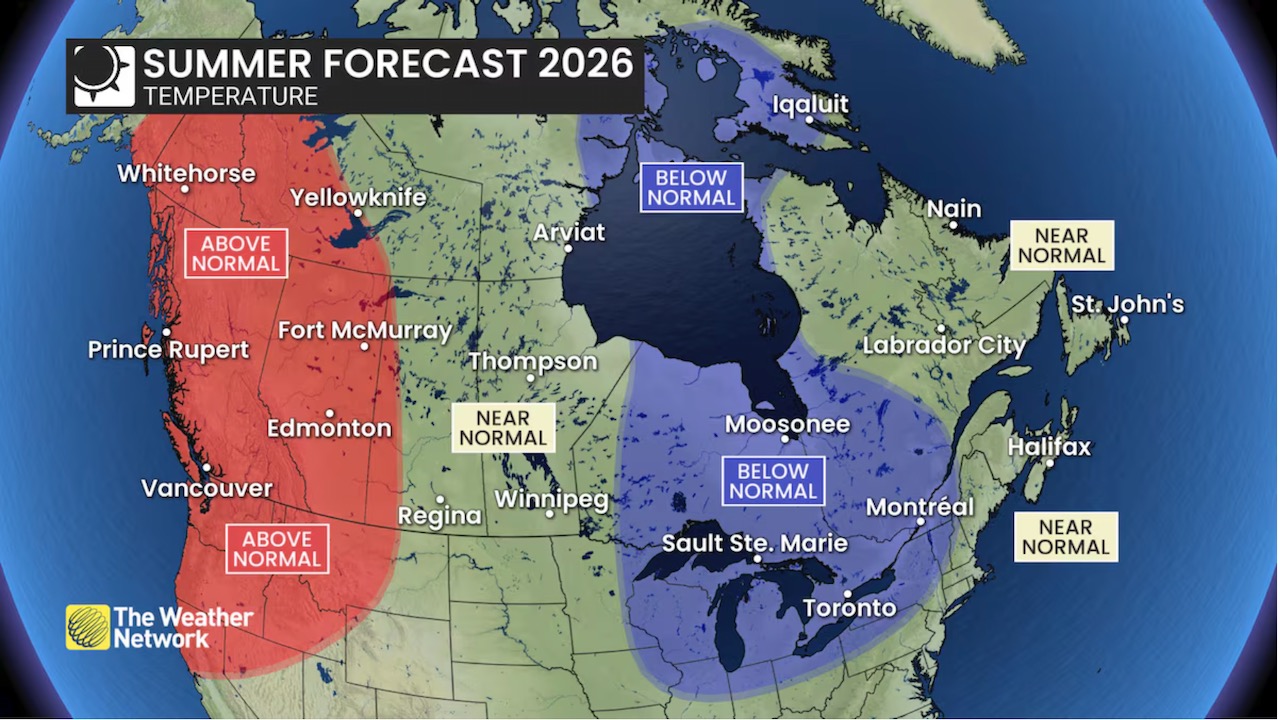
With a super El Niño brewing in the Pacific and weather forecasters predicting a hotter than normal summer for Western Canada, the threat of more wildfires looms large. Now, just in time for summer reading, there is a new book out about wildfires. “Wild Fire, Dispatches from a Country Ablaze” is a must read for anyone who lives in a forest-adjacent community, as it eloquently describes the rapidly worsening situation created by a warming climate combined with an ever-more-ready to burn province.
Stories about three recent major wildfires, the 2023 Shuswap firestorm, the 2023 wildfire that threatened Yellowknife and Jasper’s 2024 fire tornado that destroyed parts of Jasper fill much of the book. Its overall focus is that due to climate change and many decades of fire suppression that has allowed for the massive buildup of fuel in many forests, wildfires in Canada and throughout the world are becoming far more frequent, intense and thus more destructive.
Winter began his photo-journalism career in Yellowknife, so it is no wonder he chose to write about the 2023 wildfire there that began in late June, destroyed homes in two small towns and then joined two other fires in August that together threatened the city of 20,000 residents after destroying 90 percent of the nearby town of Enterprise. Although rain arrived at the last minute, dousing the flames and preventing another catastrophe, the focus for this section was to show how poor planning and inadequate communication resulted in a last minute, traumatic evacuation forcing citizens to risk it all to drive hundreds of kilometres through the smoke to safety.
The Jasper story is much more dramatic because after a century of fire suppression along with a devastating mass forest die-off due to the pine beetles, the city was surrounded by trees and forest fuel ready to burn. After lightning hit, the blaze grew to many hectares in just minutes, and the ensuing wildfire defied all suppression efforts. Unlike Yellowknife, Jasper was prepared and the evacuation went smoothly. As the wildfire approached, the wind increased and the result was likely the most intense fire cyclone in the history of Canada with 260 km/hour winds that leveled forests in minutes with heat so intense it split boulders and incinerated everything.
Although many homes and businesses were destroyed, much of Jasper survived due, in part, to the heroic efforts of firefighters, many of whom came from other jurisdictions. Eventually, the fire was diverted from blasting into the city after a risky, “Hail Mary” decision to use aerial ignition for two controlled burns on nearby hillsides that pulled the blaze away at the last minute.
The book begins with the lightning strike that struck a rocky hilltop on the east side of Adams Lake on July 12, 2023, and goes on to describe how the fire initially headed north. Without consulting local experts, BC Wildfire Service (BCWS) decided it posed no threats and thus only needed monitoring. What followed was hardly a comedy of errors, as it was no laughing matter when Adams Lake residents were told the fire was not a threat and then within an hour, they were fighting the blaze as it came down the hillside to threaten their homes.
The narrative about the Shuswap Firestorm is a case study of how government wildfire suppression efforts had become an exercise in futility due to so many factors including a centralized, arrogant and inadequately prepared wildfire service, that avoided being truthful to the public and thus lost their trust. Too often BCWS failed to put out fires before they grew too large to put out, particularly in the Shuswap. When the embers hit the fan, suppression efforts were left to those residents who bravely stayed to battle the thousands of spot fires and endure the heat from the officials who tried to thwart them.
While the “Hail Mary” tactic worked in Jasper, it was the absolutely wrong decision in the Shuswap and Winter provides us with the details about the lack of planning behind it and the resulting near loss of life that followed when a crew of Brazilians managed to survive the flames as the backburn reversed when the winds shifted as was predicted and blew the firestorm towards the lake and our communities. BCWS was eventually fined by the Worker’s Compensation for their failure to provide safe working conditions, which was not mentioned in the book.
Unfortunately, the book diverges from the truth regarding this fire. It repeats the disputed BCWS claim that the backburn saved hundreds of homes in Lee Creek, when it was obvious the backburn blaze was heading to the east and posed no threat to the homes on the west side, as the satellite image shows. Another BCWS fabrication repeated in the book is that the two fires merged, which only happened administratively, although the Bush Creek fire did blow across the Adams River to meet up with where the East Adams fire had burned days prior in Nikwikwaia Creek canyon.
Sadly, the book is a grim prophetic read, as he writes, “all the professional wildland firefighting in the world won’t be enough to hold back the monster fires that are now possible.” In addition to the three wildfire stories, it describes the urgent need for more forest fireproofing, more cultural burning and more collaboration with local community firefighters, as was the case in Knutsford near Kamloops described in the book. Overall, “Wild Fire”, is an important sequel to “Fire Weather,” as it provides the inside scoop about recent fire disasters as well as giving fair warning about our most concerning and uncertain future.
POSTSCRIPT
I do not know why Winter wrote that the Forest Practices Code Board investigation was begun due to a petition from the community when he knew that I alone had made the complaint.[1] Plus, there is no mention of my complaint leading to the investigation by the BC Ombudsperson Office into the botched evacuation notice that did not go out until it was too late and homes had burned. We continue to wait for the results of these investigations, that have dragged on for over two years.
Throughout the book, Winter paints a picture of a deadly future with a worsening climate combined with a fire prone landscape. Although he included the need to do forest fireproofing and cultural burning and pointed to its success when it helped saved the Cranbrook airport. he neglected to point out how Skwlāx te Secwepemcúlecw had fireproofed a large section of their forest and yet it burned to a crisp when the firestorm hit it.
The need for improved collaboration with local community firefighters is included and he provides the example of the ranchers in Knutsford who worked tirelessly to protect their homes and properties near Kamloops in cooperation with BCWS. Fortunately, this is now occurring throughout the province, in an increasing number of rural communities.
Although all the details are provided about the disastrous decisions to do the aerial ignition and then put firefighters in harm’s way to do hand ignitions when there was not enough time left before the blaze reversed direction, he avoided serious criticism of the BCWS upper management. Instead, he insists “When towns and cities burn, it’s not because firefighters are failing us. It’s because we are failing them, with every expert recommendation we ignore, with every pay raise we don’t give them, with every needle-clogged gutter we fail to clean out.”
After witnessing the Shuswap firestorm disaster, I would beg to differ. While the problem lies not with the rank-and-file firefighters, it is indeed with the decision-makers. The best way to prevent the loss of homes and properties is to put every effort possible to put fires out when they are small, with water bombers, rapattack crews, local contractors who work in the forest and properly trained rural property owners. Yet, too often, the water bombers sat on the tarmac, contractors were told to stand down, and the fires were allowed to grow until they become “project fires.” Then a massive amount of money was spent bringing in crews and even incident commanders from other countries. Helicopters are used instead of water scoopers, costing far more money yet delivering far less water.
BCWS is known for their retribution against any professional that make the mistake of criticizing their actions and yet many will, but only off the record. Forest industry workers have the ability to access fires immediately using large equipment and yet they most often do not, because they know they can be fined. If they speak up, they run the risk of having their cutting permits delayed or cancelled.
Of course, there are no easy solutions. Some fires grow so quickly like the one in Jasper, that it is impossible to put them out, given the current state of the forests. At this point all that can be done is to reduce the probability that communities will burn, by significantly thinning out all adjacent conifer forests and converting stands to deciduous trees, along with fire-smarting properties. We fire-smarted our home and yard, plus we logged sixty percent on the hillside behind our home and left the largest and healthiest “mother trees,” (not “small stands of pine” as Winter described in the book). Consequently, the fire reduced its intensity and our home and the neighbourhood below us was saved.
Also, despite Winter’s assertion that no amount of firefighting can hold back monster fires, there are massive structural protection systems that can prevent these fires from destroying structures and properties. In fact, Winter described two examples in the book where huge sprinklers created moisture domes that did indeed resist the flames, both in Meadow Creek[2] and in Scotch Creek. If more of these systems had been set up prior to the firestorm, the destruction would have been reduced and the fire hall would have been saved.
Despite its flaws, “Wild Fire” remains an essential book to read for anyone who lives near a forest or is concerned about the issue, which includes most of us living in British Columbia. Wildfires are currently the major threat to our existence in this province and Winter provides much insight into the problems and the solutions and as he concludes, it is up to all of us to take action to prevent more tragedies.
[1] On December 15, 2023, Jesse Winter broke the story about the trapped Brazilian crew with his article “Did it Backfire” in the Globe and Mail. In it he wrote, “B.C.’s Forest Practices Board, an independent forestry watchdog in the province, has opened an investigation into the handling of the fire, separate from the investigation sought by the firefighters’ union, based on a complaint from Mr. Cooperman.” Yet, on page 106 of “Wild Fire” he wrote, “Local residents mounted a campaign to seek accountability from the government for the planned ignition, securing hundreds of signatures on a petition calling for an investigation. The Forest Practices Board launched one, though three years later it still had not released its findings.”
My complaint was finalized on September 19, 2023, with the news about it breaking on Oct. 20th with front-page stories in the Vancouver Sun, The Province and other newspapers across the country. It was not until November 23rd that the petition was launched at the presentation I gave to a packed audience in the North Shuswap Community Hall. Here is that petition: Shuswap firestorm the last straw And here is the petition launched the following month that began the short-lived campaign – Reform B.C. wildfire response or face more summers of unnecessary devastation
[2] It was both unfortunate and unnecessary for Winter to include unfair life and character descriptions of one of the North Shuswap Strong’s heroes, who single-handedly fought the fire demon and won with his hastily assembled huge sprinkler system, thus prevented the massive blaze from burning through Meadow Creek Valley destroying countless homes and properties.