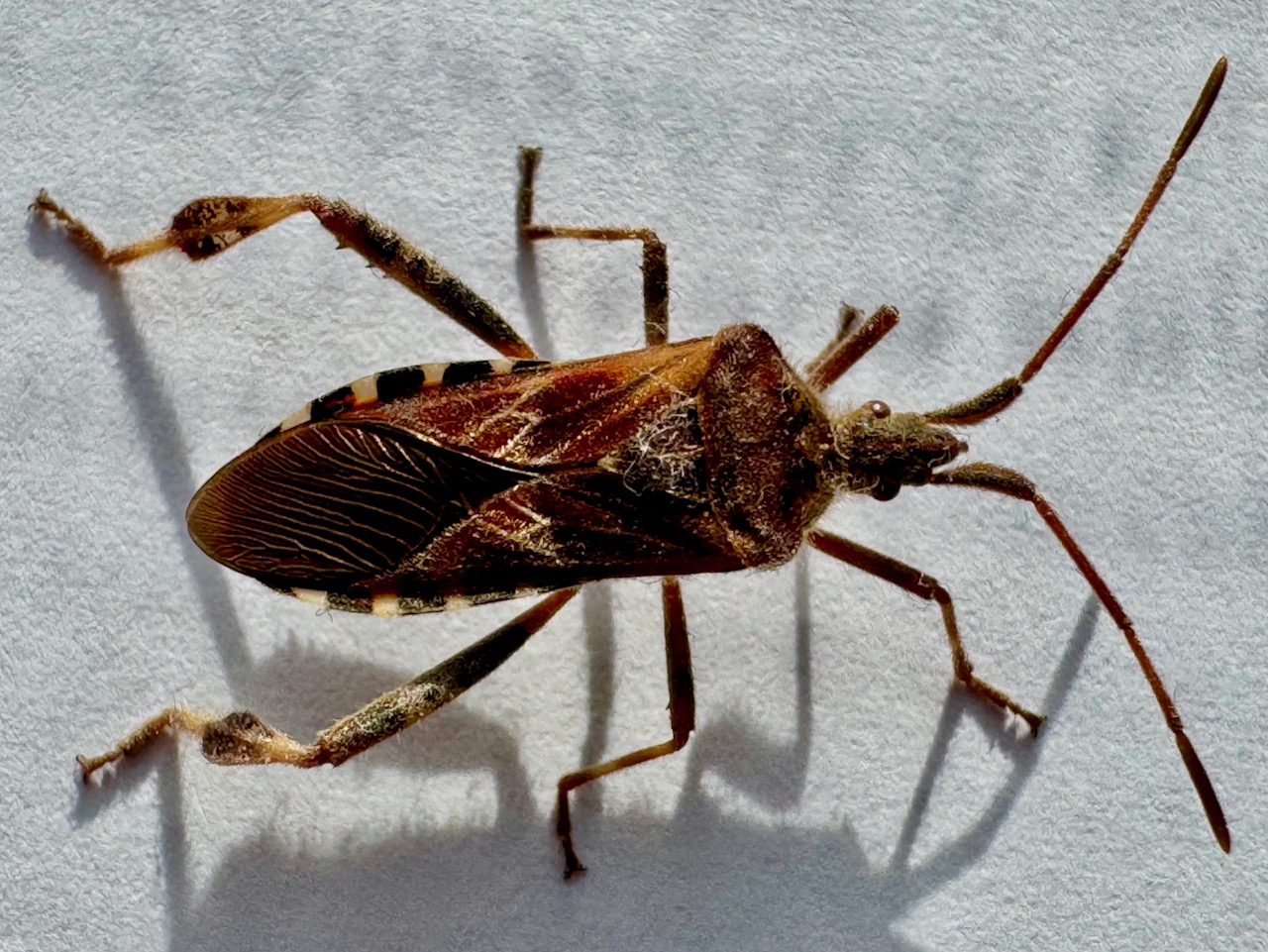
Conventional wisdom would theorize that with most of the conifer trees now gone in some areas of the North Shuswap after the 2023 firestorm and follow-up salvage logging, that the annual winter invasion of the western conifer seed bugs into our homes would decline. However, there seems to be no lack of these pesky bugs despite their diminished habitat. It turns out that these insects can fly for kilometres to seek out their winter abode, which for us includes our aging log home.
The life cycle of these bugs is quite fascinating, given their ability to evade predators, populate vast areas and live through the winter despite freezing temperatures. Although they feed on conifer seed cones, they pose no threat to the viability of these forests. However, the bugs can be a concern for seed orchards, which may have to resort to using pesticides when faced with an invasion.
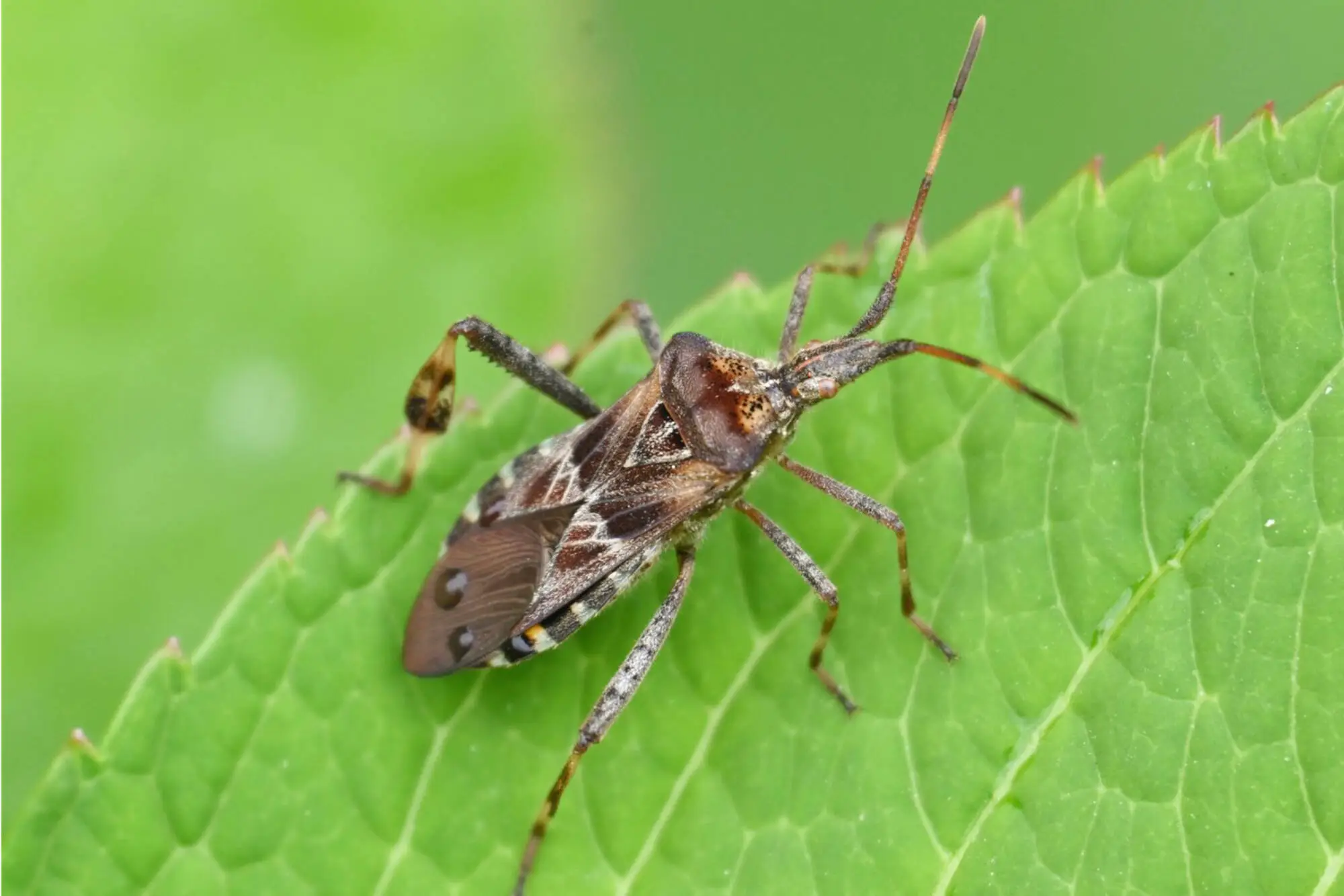
Normally, western conifer seed bugs hibernate over the winter tucked into crevices under the bark of conifer trees and emerge in the spring to lay eggs from mid-June to early August. Nymphs hatch from the eggs and feed on developing cones with their needle-like probiscis that injects an enzyme to liquefy the seed contents so it can be sucked into their digestive systems. The nymphs go through five stages over five weeks before moulting into adults.
Although the native range for the bugs is in the Pacific northwest, they have been expanding eastward and have invaded Europe and Asia. They defend themselves by emitting a foul-smelling pheromone when provoked, and they can stab with their probiscis, which is not serious enough to cause injuries to humans. Another way they deter predation is by mimicking bees and wasps, as they have a yellow abdomen and can make a buzzing sound when they fly.
Come fall, when the bugs are seeking shelter for the winter, they often congregate on the outside of our homes and then squeeze inside via cracks around windows and doors or in walls. They awake in warm weather to fly around the house and often land in inappropriate places. The best device for dealing with these invaders is a portable vacuum. On some days we can suck up many dozens. Perhaps it was our neighbour who once experienced the worst-case scenario, when he awoke to one crawling on his face and when he went to swipe it away, it sprayed into his eye, forcing him to go to emergency for treatment.
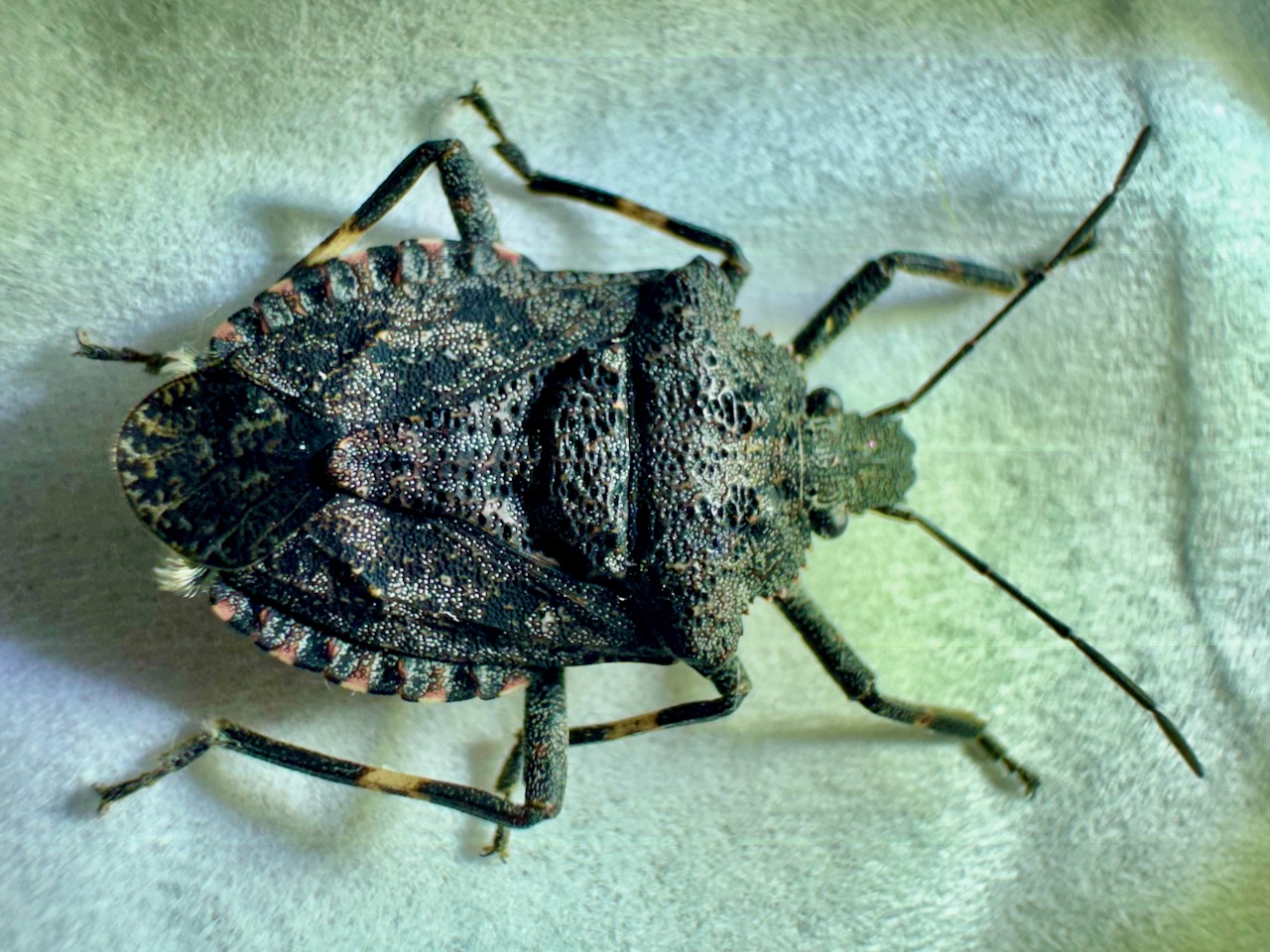
Sharing the contents of our vacuums this year are true stink bugs, the round, grey rough stink bugs. There are up to 23 species of these bugs in North America, including an invader from Asia, called the brown marmorated stink bug, that can be a serious agricultural pest. These bugs also begin as eggs laid on tree twigs that hatch into nymphs and then undergo four stages before becoming adults. Unlike the conifer bugs, these bugs are primarily carnivores and dine on caterpillars, beetle larvae and sawflies and thus can be beneficial. They can also suck up plant juices, but do not harm gardens or crops.
While the conifer seed bug secretion smells like tree sap, the rough stink bug releases an unpleasant chemical scent similar to cherries or almonds. As it overwinters in either leaves or tree bark crevices, it can also invade our homes. Its predators include assassin bugs, spiders, preying mantids, birds, wasps and tachinid flies that attach eggs to their bodies that hatch into larvae that crawl into their bodies to eat them from the inside.
The rapidly warming climate may be one reason the population of these bugs is increasing. This year’s well-above average winter temperatures have meant that the bugs become more active inside our homes. Of course, the increased number of stink bugs should be least of our concerns when compared to the increase in temperatures, droughts, atmospheric rivers, sea level rise, wildfires, extreme storms and glacier melt as more carbon is added to the atmosphere.
POSTSCRIPT
The Skimikin Seed Orchard produces seed stock for tree nurseries and since it was established nearly fifty years ago and it has oten faced infestations of western conifer seed bugs. Keith Cox managed the orchard for over 30 years and he was amazed how the bugs could swarm into the orchard just when the cones were full of ripening seeds. Since the facility, based in Tappen, is surrounded by Douglas fir forests, the orchard grows spruce, Ponderosa pine, white pine and lodgepole pine to avoid any cross-pollination from the nearby trees.
On some years, they would encourage seed production by holding back on the irrigation, because drought encourages cone production. Thus their trees were full of seed, when the surrounding forests had few and yet the bugs would fly many kilometres to feed on their trees. Keith thinks that it the odour produced by cones that attracted them. When infestations became problematic, the government-run orchard would have to resort to spraying the pesticide, sevin, to kill the bugs.
Keith also explained how these seed bugs are on oddity in the insect world, given how it is the adults that overwinter, whereas for most other insects, it is either the eggs or the larvae that live through the winters. He is also amazed how they manage to insert their proboscis into the seeds, which can be as firm as wood. Lean more about the Skimikin orchard and other local tree nurseries here.
In addition to the stinkers, our house is also invaded every year by ladybugs, which we try to keep living because of the benefit they provide in our gardens. Perhaps the increased numbers are because the ones we purchased to control aphids in the garden have multiplied and are now seeking out a warmer spot to spend the winter. Of course their numbers are still not high enough to ward of the aphids, which continue to be a garden pest.
This year we are also faced with increase numbers of paper wasps. How and why they are entering our home is somewhat of a mystery, but they too end up in the vacuum. They may be the European variety that are an introduced species that were first sighted in 1978 near Boston and have since expanded their range across North America. Apparently it is the queens that overwinter, which seems incredible since we have so many of them. They too are a beneficial insect, but I am not about to capture them and get them back outside given that their sting can be quite painful.