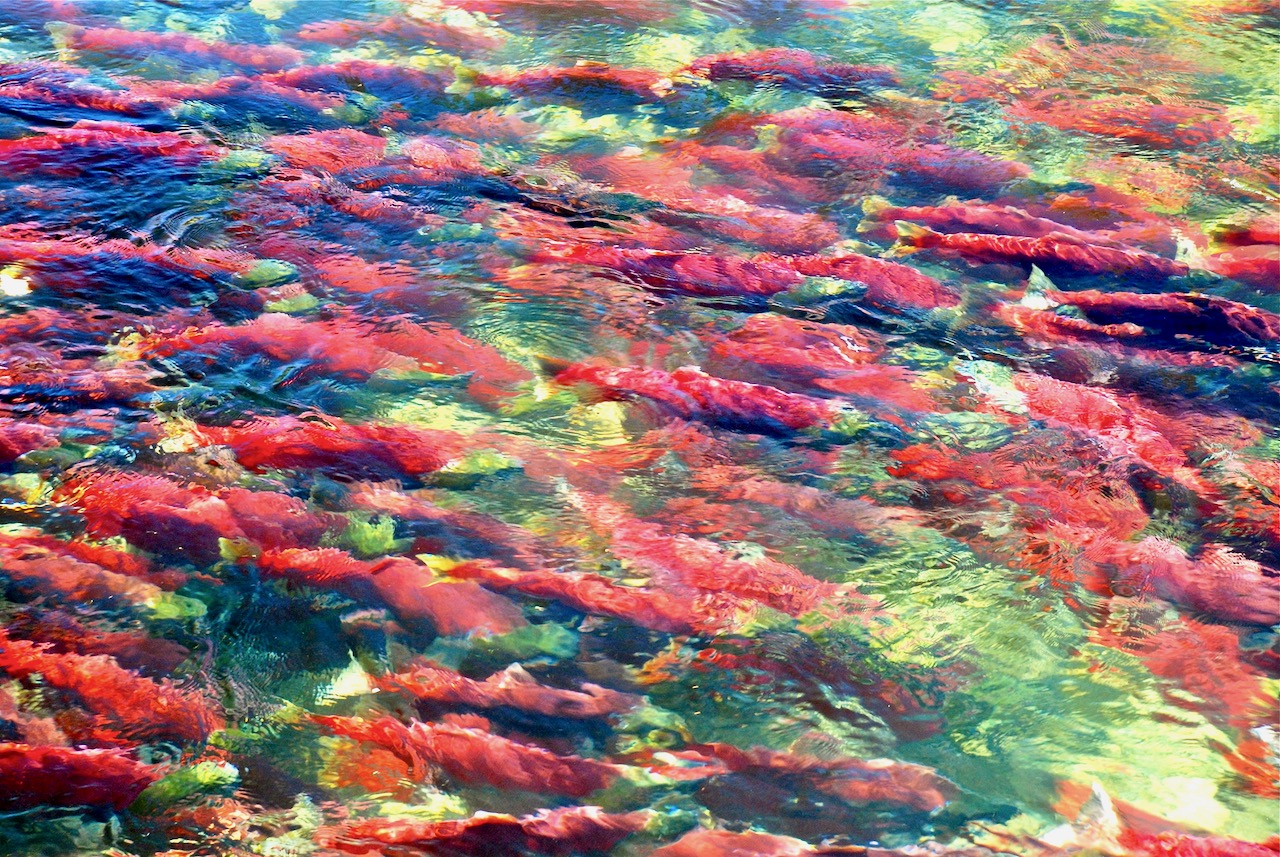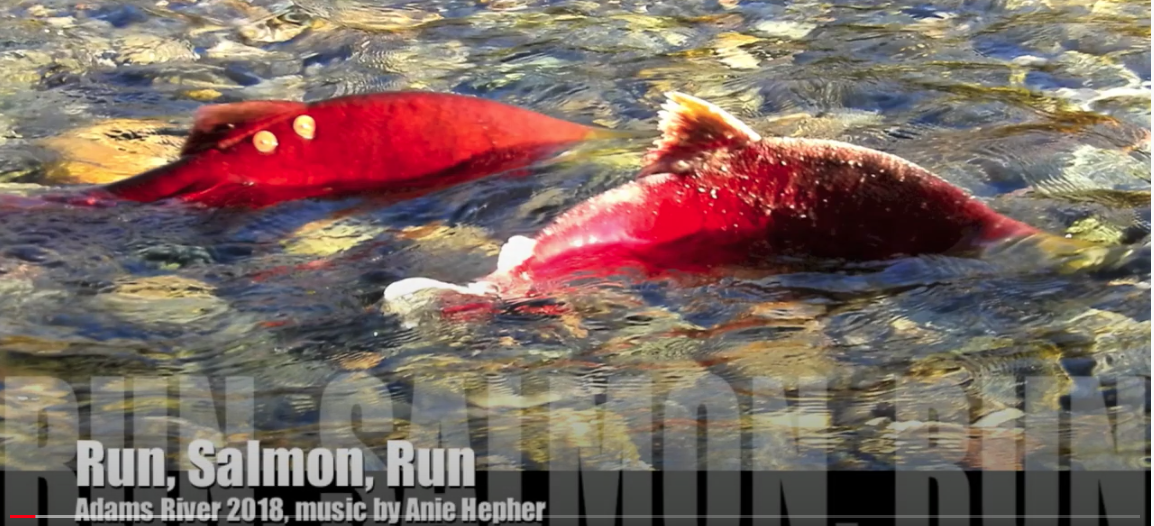
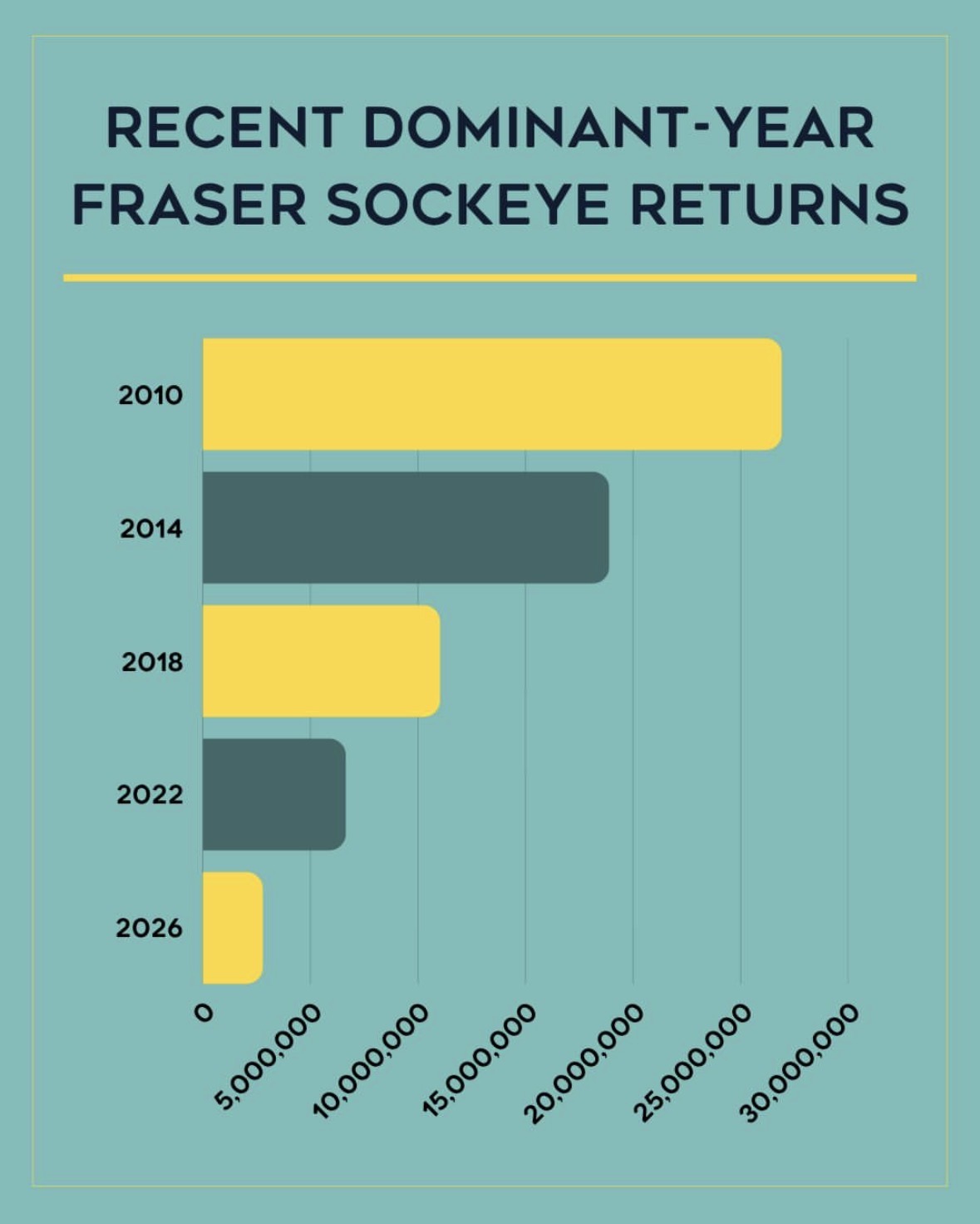
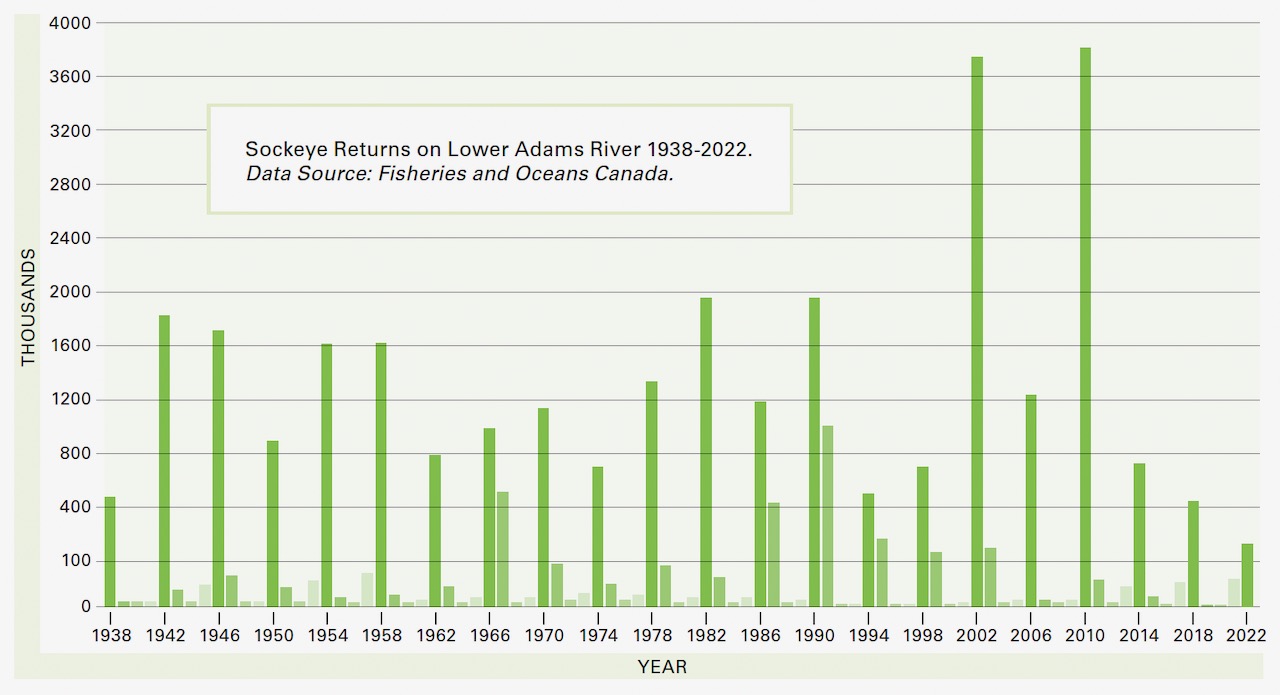
It is a mystery that has stumped even the experts. There has been a steady decline in the numbers of sockeye returning to spawn in the Fraser River drainage, this year’s original forecast for 7.7 million has recently been downgraded to 3 million and of that only one million are expected to be in the late run. This means that the number of fish returning to the Adams River could be less than the 2022 return of just 345,000. Experts cannot agree on any one explanation for this sudden, rapid decline, however there is little debate that it is associated with the warming climate that is impacting salmon’s terrestrial and marine habitats.
The Pacific Salmon Foundation can only offer this, “Returns of Fraser River sockeye, and Pacific salmon generally, are notoriously difficult to forecast, given the unpredictability of freshwater and marine conditions, especially in a changing climate. Still, experts note that the causes behind this year’s downgrade aren’t fully understood.”
Last year, more sockeye returned than were anticipated and one theory for the increase is that the removal of the fish farms along their migration route helped boost the numbers. Thus, there was hope that the run size would also increase in this peak year, but alas, the situation now looks dire.
In addition to overfishing, which has been much less a concern in recent years, the list of potential causes include issues for which there are no easy solutions. The top concern is the climate chaos that is warming the ocean and thus reducing the numbers and the nutrition levels of the zooplankton and krill, which are the sockeye salmon’s main food source. When salmon head out into the Pacific, their primary destination is the Gulf of Alaska, where they must compete with larger populations of wild Russian and Alaskan salmon, plus an increasing number of hatchery fish coming from Japan, Russia and Alaska. Evidence of this is seen in the declining average size of salmon over time. The issues facing the Fraser River salmon are also occurring in other runs, including the Skeena and Nass Rivers, as well as runs in Japan and Russia. Most returned below forecast.
Warm waters also stress the fish which can result in more bacterial and viral diseases that current research indicates can possibly be passed from generation to generation. As well, as the ocean warms, southern species, including sharks, migrate north to feast on rearing salmon. Despite all these issues, Fisheries and Oceans have been reducing their funding for monitoring and have decreased the funding of research into the ocean’s “black box” that could help analyze the challenges that salmon face in the ocean.
Most of the sockeye returning this year, began their lives after spawning in 2022. They grew into smolts in Shuswap Lake through 2023 and 2024. It was one of the warmest years on record in 2023, when the Shuswap firestorm devastated the North Shuswap and the lake was at its lowest level on record. It is possible that these conditions influenced changes in the lake’s ecosystem and negatively impacted the growth of the smolts, either weakening them or killing them.
The collapse in Fraser sockeye has led to a concurrent, and painful decline for the commercial fishing industry. First Nation Food Social, and Ceremonial fishing continued until the end of last month when it too had to be closed. However, there are reports of some level of illegal fishing, particularly in the lower river.
What salmon do make it up to the Adams River this year could face more problems due to potentially warmer than normal river temperatures, worsened by the loss of shade trees due to the 2023 wildfire, which could cause higher-than-usual pre-spawn mortality. There is good news however, as recent restoration efforts will hopefully result in an increased area of spawning habitat.
Overall, the future looks bleak for sockeye, yet the numbers of some populations of coho and chinook salmon are increasing because their rearing habitat differs, as well as what they feed on. However, those chinook populations which rear for two or more years in Fraser streams and are critical to the recovery of southern resident killer whales, as well as Thompson and Chilcotin steelhead, face a challenging future. The expected even warmer ocean temperatures due the upcoming monster El Niño could result in worsening an already troubling situation. Hopefully, at this rate, the every-four-year Sockeye Festival will not one day turn from a celebration into a wake.
POSTSCRIPT