The chances that long-time residents know something about their community’s heritage are likely higher in the North Shuswap because of the 41 years of work that their historical society has put into preserving history. I joined the North Shuswap Historical Society in 1986, a year after it formed, and was delighted to learn from and work with these sons and daughters of the original pioneers, along with a teacher at the Celista School and the renowned historians, Philip and Helen Akrigg, who had a summer cabin in Celista.
During those early years, we worked to build the archives, interview elders, and identify and share the locations of heritage sites. In addition to my ongoing local history research for my columns in the Chase Tribune, I copied hundreds of historical photos using my SLR camera and lights. It was likely in 1987 that we began to discuss about producing a publication and I suggested we do a yearly journal, which is when the Shuswap Chronicles project began.
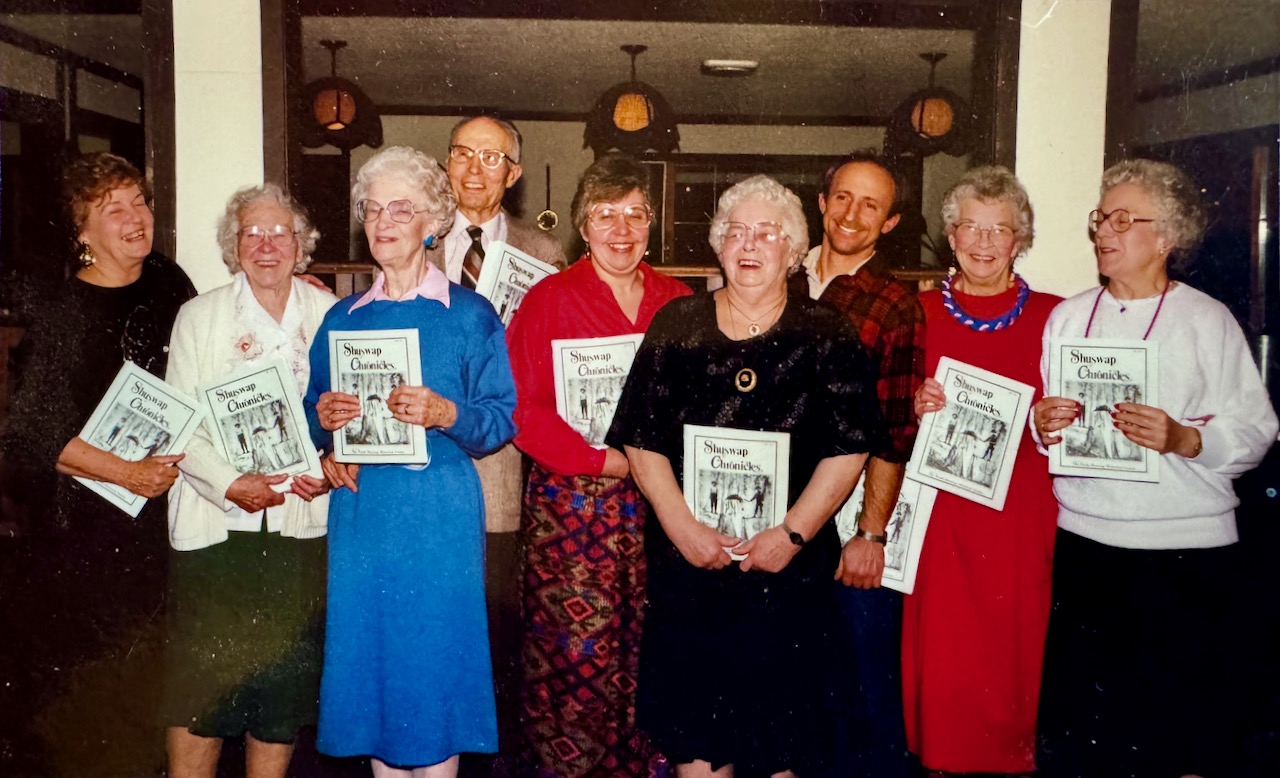
The first volume of Shuswap Chronicles was published in 1988 and included articles about the sternwheeler days, fall fairs, the Shuswap Lake ferry, George Mercer Dawson, and Harry Fowler, the community’s first pioneer. In the centre, is a map showing the locations of historical buildings along with photos. I co-edited the first two volumes along with Celista teacher, Mary Zoretich. Only a few of my articles appeared in volumes three and four, as I was too involved with environmental work to continue my involvement with the historical society. Many of my early writings were incorporated into volume one of Everything Shuswap.
Over the succeeding years, the society published 12 volumes of the Chronicles, all filled with excellent articles about this region’s rich history. In 2001, North Shuswap native, Loretta Greenough (nee Zinck) retired from teaching and returned home. She soon became very involved in the community including the Historical Society as the president and the editor of the Chronicles. Under her leadership, the organization expanded its scope and impact in the community.
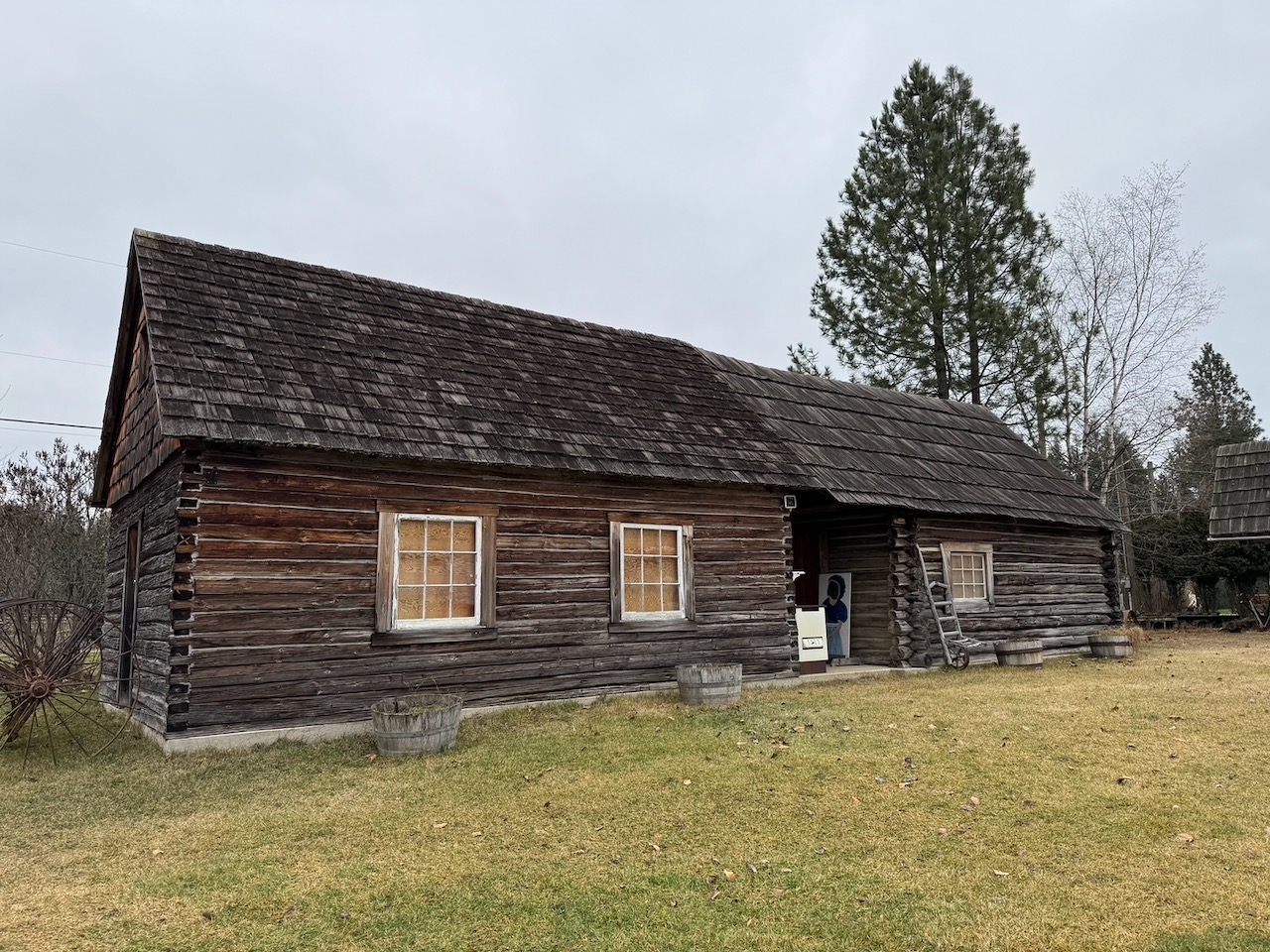
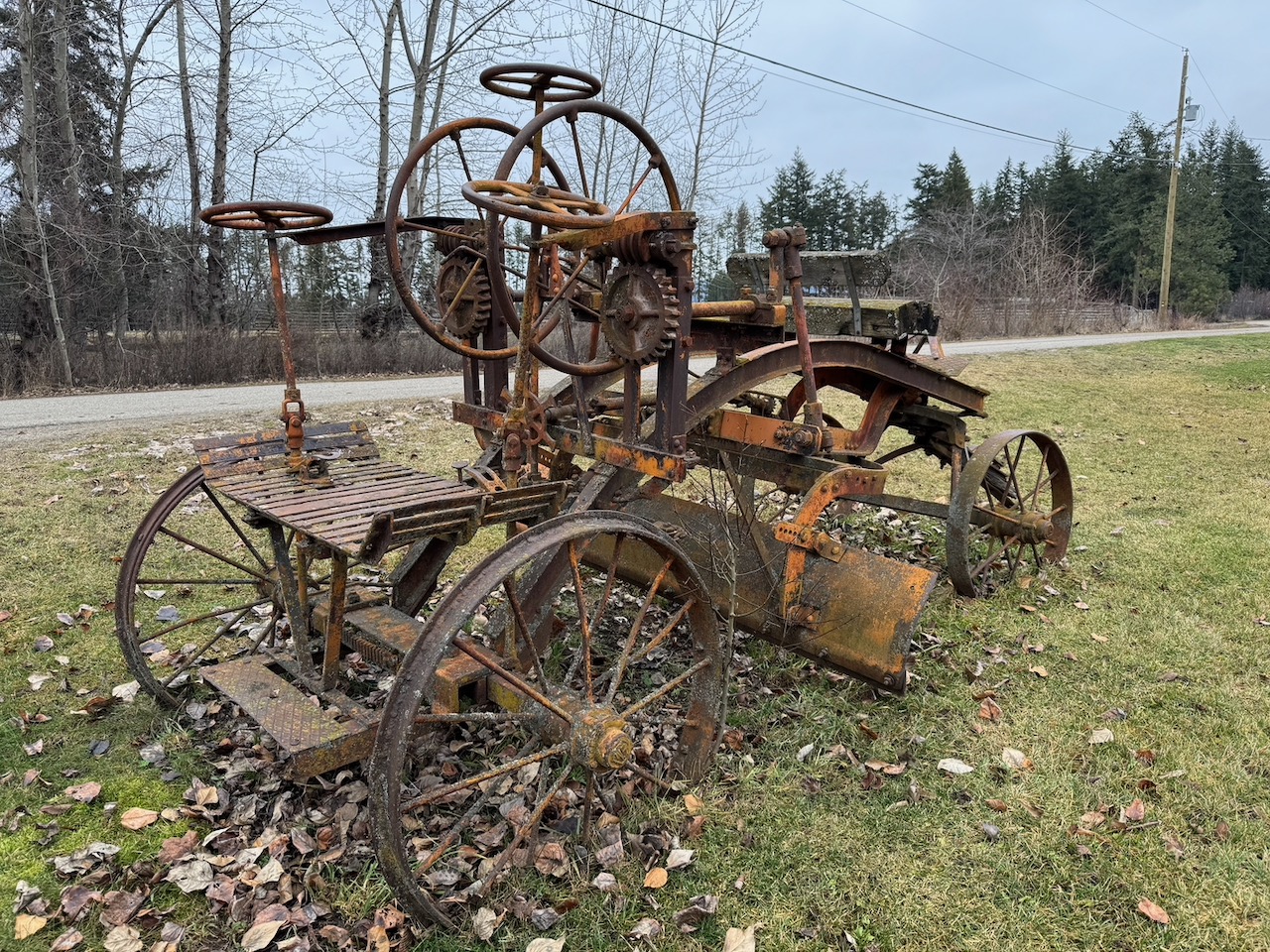
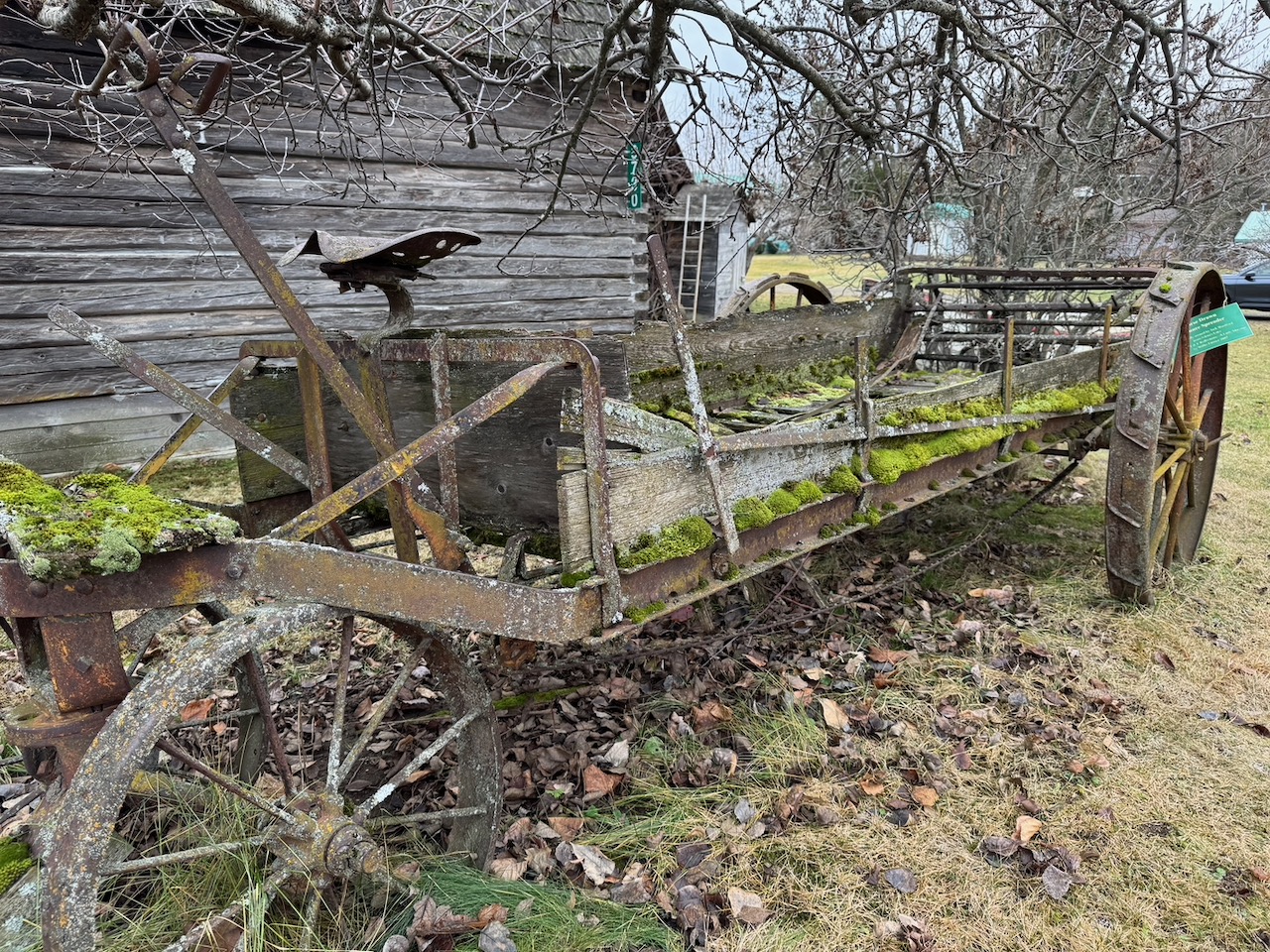
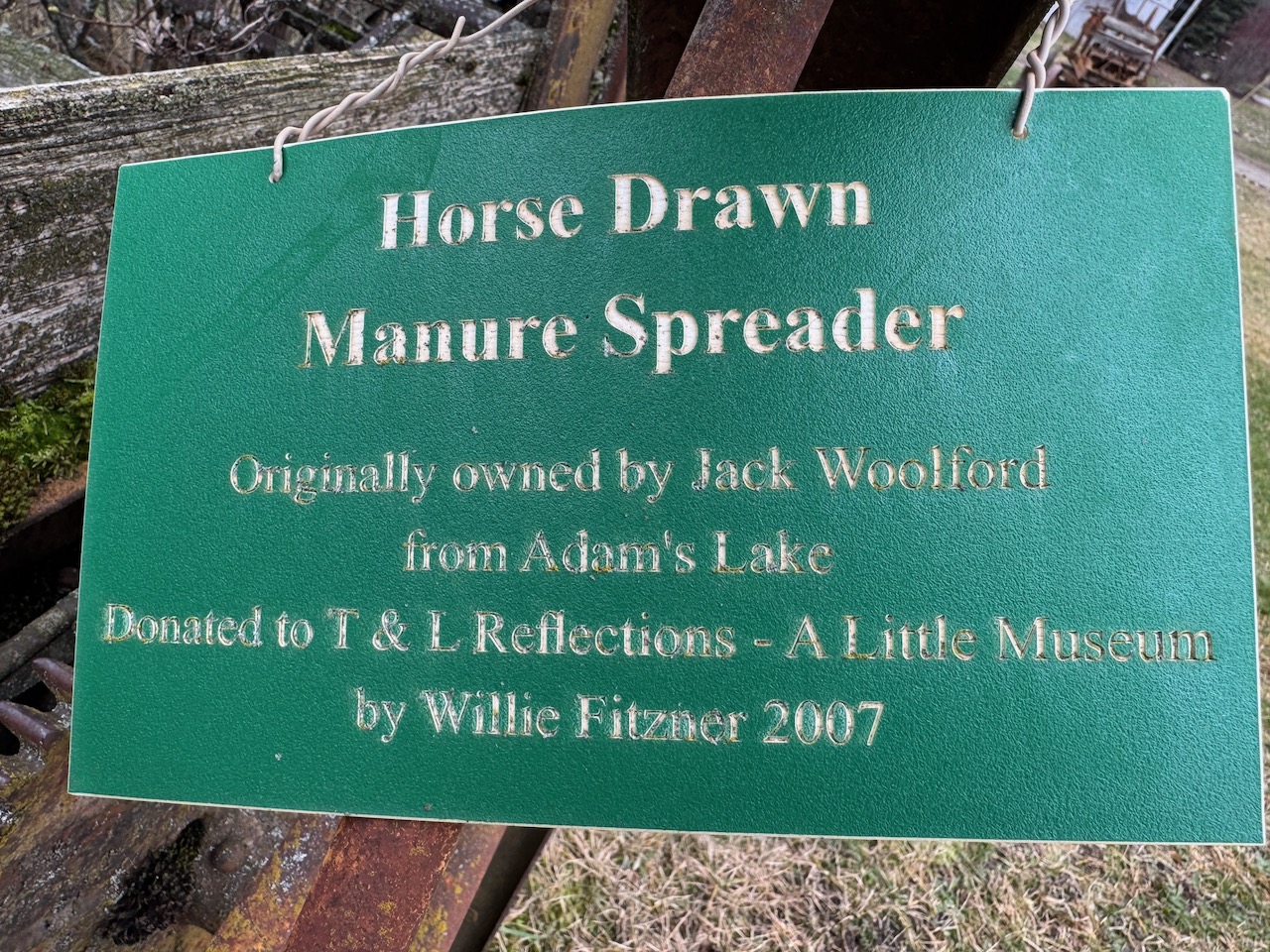
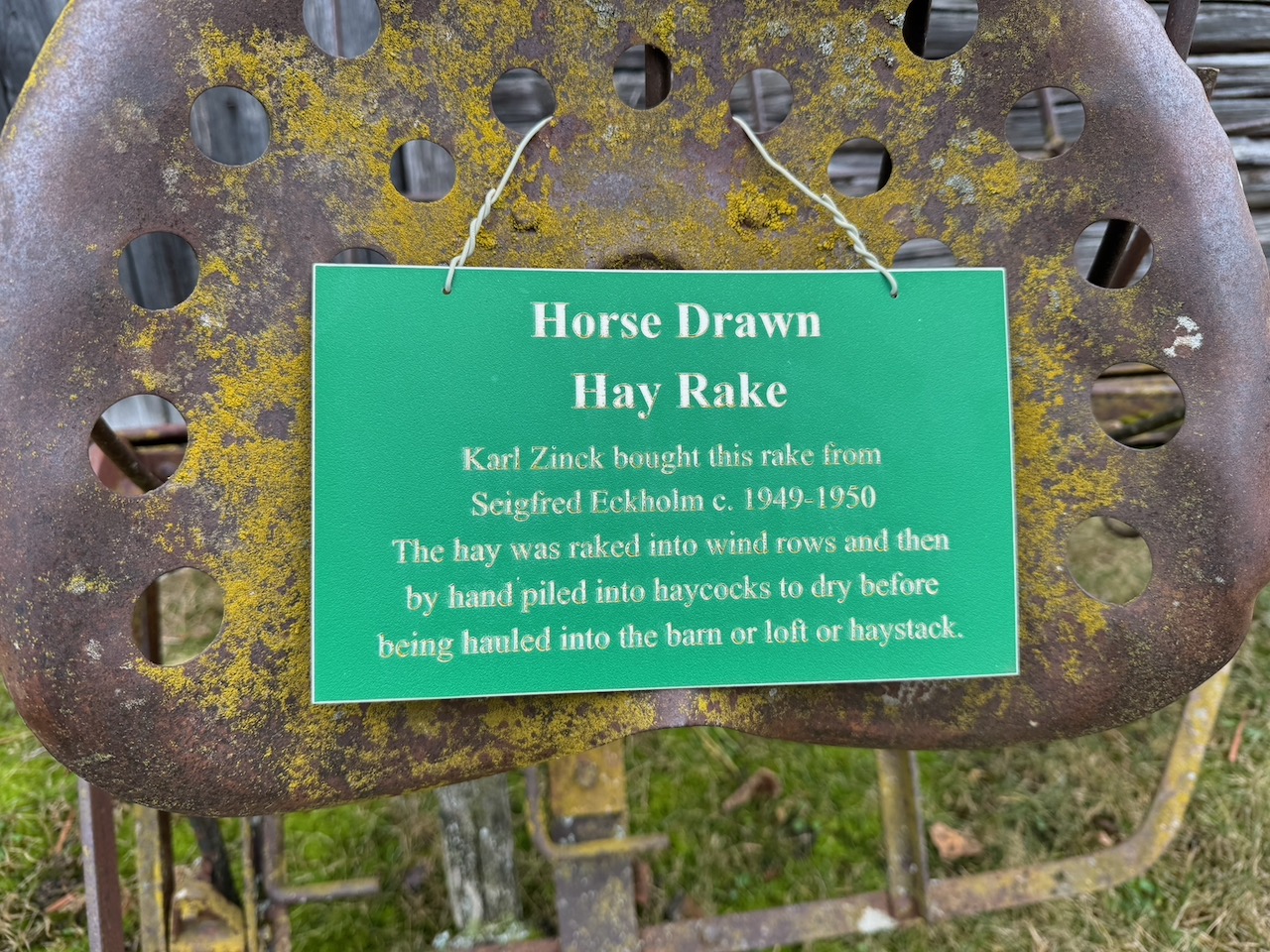
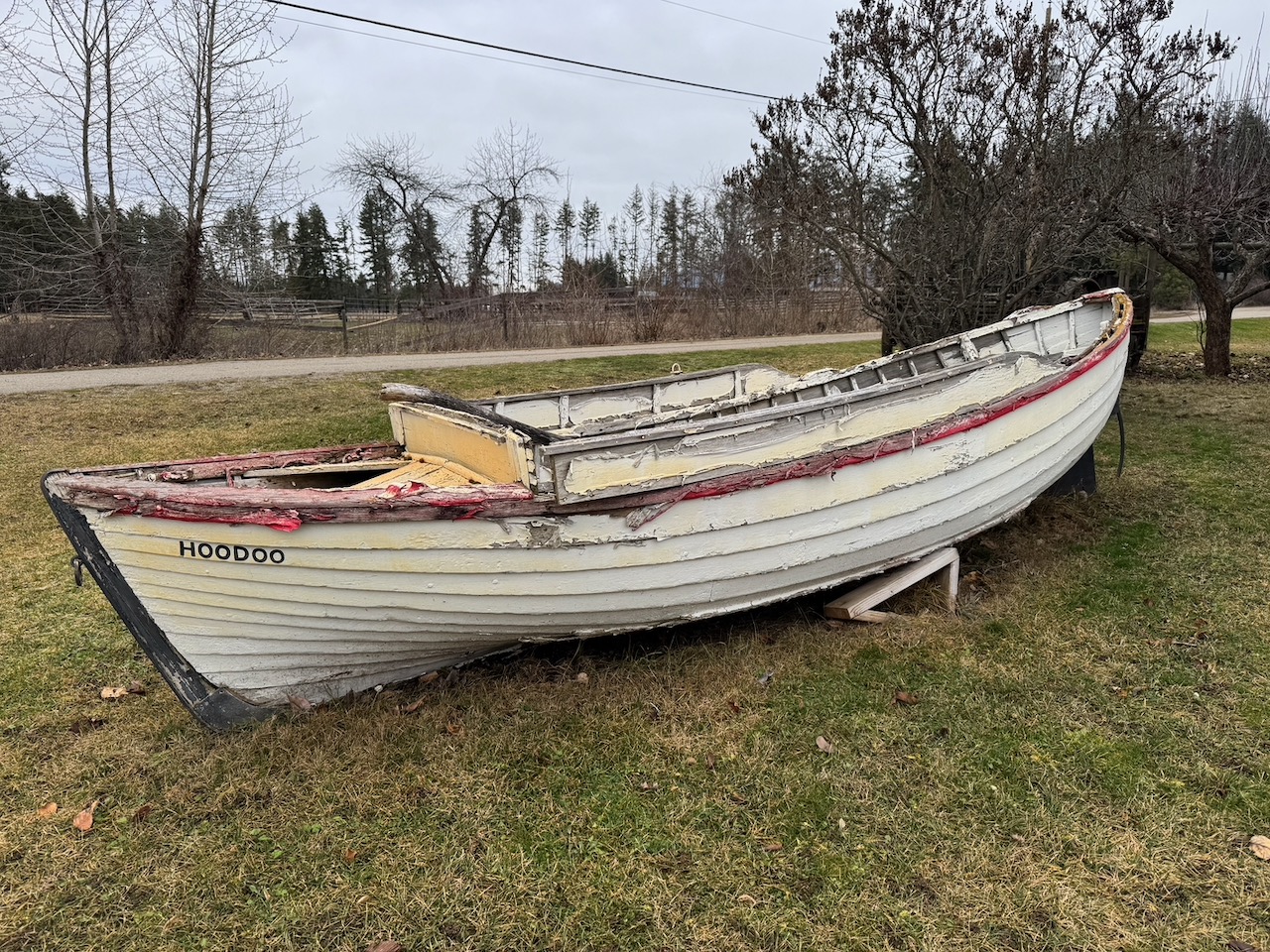
Inside her home, Loretta stored the society archives, which she continued to organize as well as digitize documents and photos. Additionally, Loretta with help from her husband Tom and society members, moved three log cabins to her property to create T & L Reflections – A Little Museum that was filled with donated antique tools, household items and furniture. Sadly, Loretta passed away in 2024, leaving all her work, as well as a sizeable donation to the historical society.

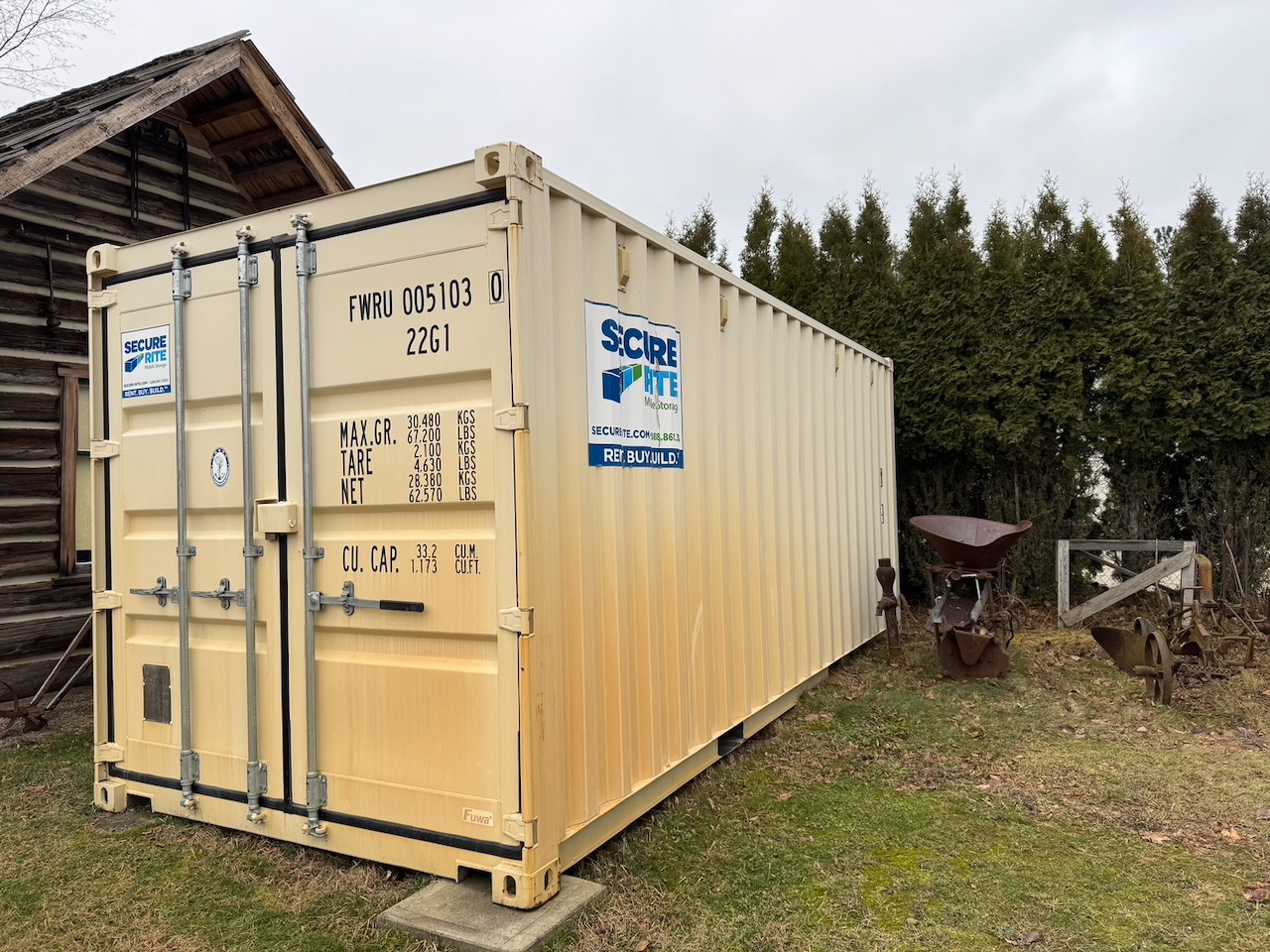
Now the society is now under the leadership of another pioneer grandchild, Frank Riley with other pioneer family members on the board of directors. They have an enormous task ahead, as they need to soon move the archives, along with the log museum and an additional container filled with more antiques to what will hopefully become a permanent location. In the interim, a portable office building has been set-up to house the archives.
The 2023 firestorm laid waste to several old historical sites and buildings, including the old barns in Scotch Creek and the Squilax General Store. It also created an opportunity to improve community services, as the now vacant CSRD property where the former firehall stood is available. There is a plan for a building that would provide space for the Chamber of Commerce, and other community groups including the Historical Society. As well, there is a plan to move one of the heritage cabins to the property for a museum that could see many visitors throughout the year.
With the world changing so rapidly now, it is important to continue to preserve and to better understand our collective history. The North Shuswap is fortunate to have so many pioneer families still living on their properties, where some of the original buildings remain standing. As well, we can appreciate the efforts of those who strive to record and tell the stories of those who worked tirelessly to build our resilient community that continues to thrive today.
POSTSCRIPT
The North Shuswap Historical Society website is in the process of being re-built and re-designed. The former website can still be seen here. In it is this history of the organization:
North Shuswap Historical Society
Unlike the birth of Venus rising from the ocean on a seashell, the North Shuswap Historical Society arose, not from the waters of Shuswap Lake, but from the enthusiasm and excitement of the old timers who gathered to celebrate the North Shuswap Community Hall’s Fiftieth Anniversary on July 28, 1984. The beginning of the Historical Society is inextricably bound up with that grand event, with the floats in the parade, the banquet served by the North Shuswap Women’s Institute, the evening program by the Angle Bay Singers, ending with dancing to the Kamloops Old Time Band, two of whose members, Stanton Noakes and Edgar Shepherd, had played at the opening of the hall in 1934. This anniversary celebration was sponsored by a committee of the Community Association, headed by Dorothy Riley and Eleanor Nelson, both of whom had come into the North Shuswap as teachers in the 1920’s, had married local men and lived here ever since.
When these old timers and a few interested newcomers, twenty-seven in all, gathered in November to view a videotape of the Fiftieth Anniversary Parade, they elected another committee to look into the formation of an Historical Society. Members of the committee headed by Mary Zoretich were Dorothy Riley, Eleanor Nelson, Ken Behnsen, Eileen Blais, Vivanne Lea and Stanton Noakes.
The following spring on April 17th, 1985 the first meeting of the Historical Society was held in the clubroom of the Community Hall, where they elected Mary Zoretich President. Mary was neither old, nor an old timer, but as a teacher in the North Shuswap School, was interested in and belonged to the community.
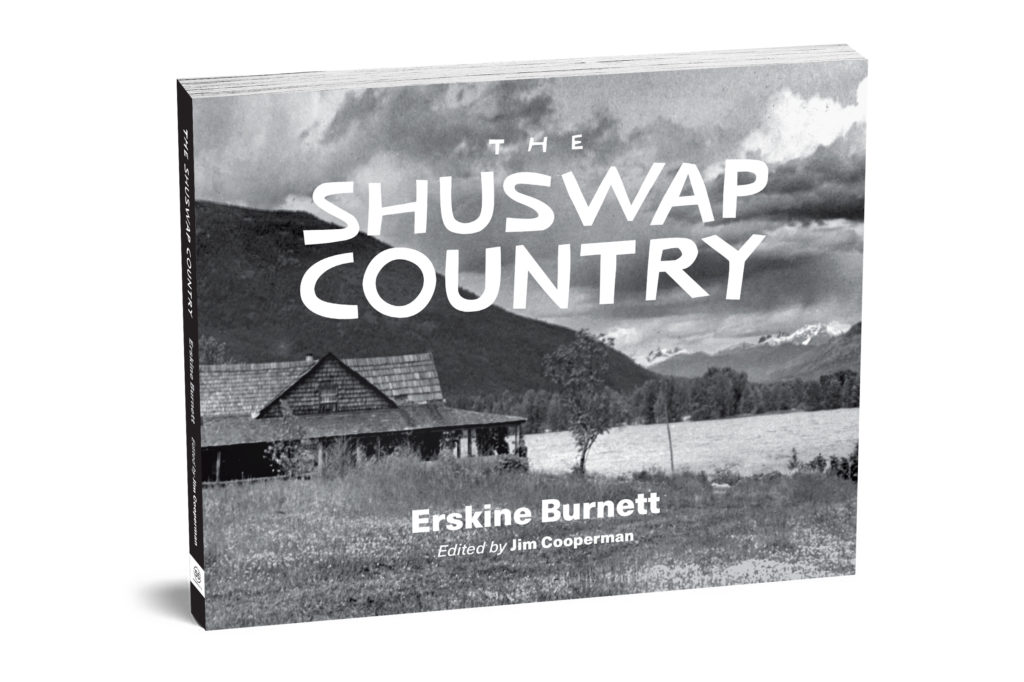
For the first two years the main activities were tours of the old houses built before 1940. Everyone loaded up in car pools and drove from homestead to homestead, walking around each of the buildings, while Stanton Noakes and Eleanor Nelson told about the homesteaders who built and lived there long ago. These were nostalgic events for the old timers, and very interesting for the younger, new people of the community. The first “Historic Walkabout” was on May 25th, 1985 from St. Ives to Magna Bay, followed by further trips to Lee Creek in 1986, and out to the first settler’s house in Meadow Creek in May 1987. Jim Cooperman, who had come to the area in the 1960’s, took photographs.
In the first year the group gathered and made copies of 250 old photographs, gathered memorabilia and started collecting material for an Archive. Stanton Noakes, who had grown up in the area, compiled a map of the early homestead sites. The following year they hosted an Old Time dance at the Cottonwoods on March 7th, and a Christmas celebration at the school on December 15, 1987 with old-time refreshments, music and pioneer stories. A good time was had by all, especially the school children, many of whom took part and enjoyed contrasting their school lives with those who came before them.
In 1988 the thirty-member group decided to publish a small journal called the “Shuswap Chronicles”. That was a busy year, but the first Chronicle was published on July 7th with co-editors Jim Cooperman and Mary Zoretich plus an editorial board of eleven. The celebration of this first edition was a picnic attended by forty people, at the then standing but long-unused Lee Creek School.
Several people who had gone to the school in the 1920’s attended this party. This was the first ever history about the North Shuswap, and was dedicated to the Pioneers. More than half the cost of printing had been solicited from local businesses and individuals, plus seed money donated by the Community Hall Committee, left over from the 50th Anniversary celebrations.
Plans at that time were to renovate the Lee Creek School to become a gallery. However, this plan was never implemented because the old building was found to be not structurally sound enough. Eventually, in 1997, the old school, which stood on Canoe Federated Co-ops’ property was destroyed by the Co-op. It had become a potential hazard to anyone who ventured into the building.
Volume 2 Chronicle was published in June 1989, dedicated to the First People of the Shuswap, especially the Natives. It was decided not to confine the territory to just the North Shuswap, but to extend it to the whole Shuswap Lake area. A grant of $2,975.00 from the New Horizons Society helped with the cost of printing, but the work of writing articles, typing, arranging photographs etc. was done by volunteer editors Mary Zoretich and Jim Cooperman, with help from the club members.
On November 30th, 1989 the group was invited to the North Shuswap School to tell the students, “What it was like when we were young”. The Grade Three Class began a history study of the first schools of the area. The children divided into small groups according to the proximity of their residence to the school. They then prepared a set of questions for their guest. It was possible to find for each school a pupil, or in some cases, one of the teachers who still lived in the area and were willing to come to meet with the children. The children invited their guests and met with them. This led to some interesting sharing of information and then some field trips with the pioneers. One of the most memorable of these was a visit to the local cemetery where discussion of early pioneers buried there ended with rubbings of the headstones and essays on their findings.
The Squilax Bridge was featured in Volume 3, published in time for the Christmas market in 1990, with editors Mary Zoretich and Shelah Norley. Chronicle 4 took a lighter look at the past with ”Love, Laughter and Good Home Cooking” in August of 1993, edited by Mary Zoretich, who has been the heart and soul of this Historical Society.
By this time the group had earned enough money from sales of previous Chronicles to pay for printing the next one. However, when Chronicle 4 was delivered, there was not enough money in the account to pay the printer’s bill. By Lorna Barnhardt’s energetic marketing the group earned enough to pay the bill in full by the end of the month! We are proud to be fully self-supporting. One cold winter evening in January 1993 our intrepid treasurer, Madge Noakes, dropped a $146.50 deposit into the outdoor night depository drum of the Credit Union. When she phoned in the morning to see if the deposit had arrived, she was told that the mechanism was frozen, and they could not get the envelope either in or out – it was immovable until the weather moderated. We called this our “Frozen Assets”.
Chronicle 5, on sale before Christmas, 1995, was dedicated to the First One Hundred Years of white settlement, featuring the Bischoff family who settled on the North Shore in 1895. This issue also began a series of stories about old houses, their builders, their changing ownership, renovations, and the people who lived in them, and perhaps even their ghosts!
Membership is now nineteen. Some elderly members have passed away, some have moved closer to hospital facilities, but the group is attracting some new and younger people as the population of the North Shuswap is increasing. Over six hundred photographs have been copied and the archive collection has grown. The group still hopes to establish a museum. In the Chronicles the North Shuswap Historical Society has tried to put flesh on the bare bones of history, to write with human feeling and sense of humour, and to make history come alive.
Written by Vera Ellaschuk
Since Vera Ellaschuk wrote this history in 1995, the North Shuswap Historical Society has remained very active. They have produced five more chronicles, Volume 6 in 1998, Volume 7 in 2003, Volume 8 in 2006, Volume 9 in 2010 and Volume 10 in 2014. The group will soon begin working on Volume 11.
Calendars came into production in 2007 depicting Historic Buildings, 2008 Historic Farm Life, 2009 Celebrating 75thYear of the Community Hall, 2010 Transportation, 2011 Early Schools and Stores, 2012 Images of the Past, 2013 Celebrations of the Past, 2014 Some Pioneers of our Area and 2015 Glimpses of By-Gone Years. This has been a popular commodity.
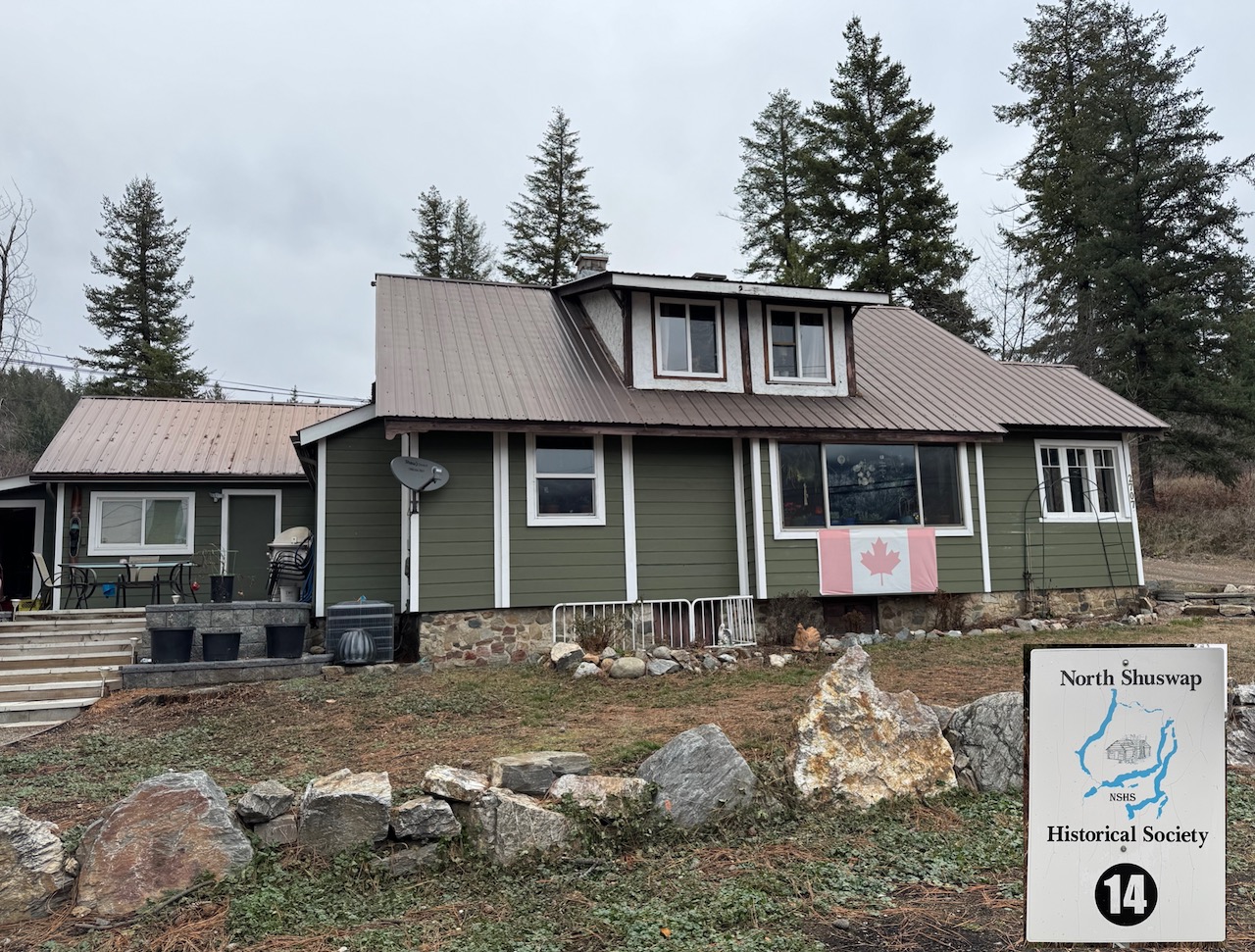
The society has produced four Self-Guided Driving Tours of historic sites in the North Shuswap. The first in 2008 was a driving tour of Celista. Later were added Lee Creek and Scotch Creek. The fourth driving tour includes Magna Bay to St. Ives. Signs along the highway with the NSHS logo and numbers, which correspond to the write ups in the brochures, are easily recognized. [see above]
In 2010 the NSHS nominated, and the British Columbia Historical Federation honored, Tom & Loretta Greenough with a Certificate of Recognition “for their many contributions to history in the North Shuswap Community.” In 2010 the NSHS placed a plaque commemorating 100 years since the first pioneer was interred in the cemetery. William Dalin gave a short talk about Frank Bagshaw. In 2011 the Historical Society began setting out Geo-Caches at significant historical sites. To date they have nine sites. In each cache along with goodies is a short paragraph explaining the historical significance of the site. They plan on placing a few more.
Since 2007 Photographic Presentations have been given, and history talks to the public in the North Shuswap Community Hall as well as in Shuswap Lake Provincial Park. Presentations have also been made to the Salmon Arm Historical Society. On several occasions talks were given to the North Shuswap School. These talks gave the students a brief local history, how children were involved in May Day as well as the type of sports activities children were active in years ago.
Each year field trips and or mystery tours are organized. Usually they involve outings to various historic sites and interesting places or activities. For the past six years the NSHS has volunteered to do spring clean up at the North Shuswap Cemetery. They placed a bench in the cemetery in memory of Tom Greenough.
Behind the scenes members are collecting and scanning photographs to add to our collection. Members are building an obituary book. They are organizing material into proper archival files as well as collecting as much history of the area as possible. Membership has increased in recent years. Many members, supporters of the NSHS, actually live in distant places, but have historic ties to the area. Members are constantly working on collecting photographs and stories as well as interviewing pioneers. Lately, the group is encouraging people to collect information from the 50’s, 60’s, 70’s, 80’s and 90’s as that is now History.
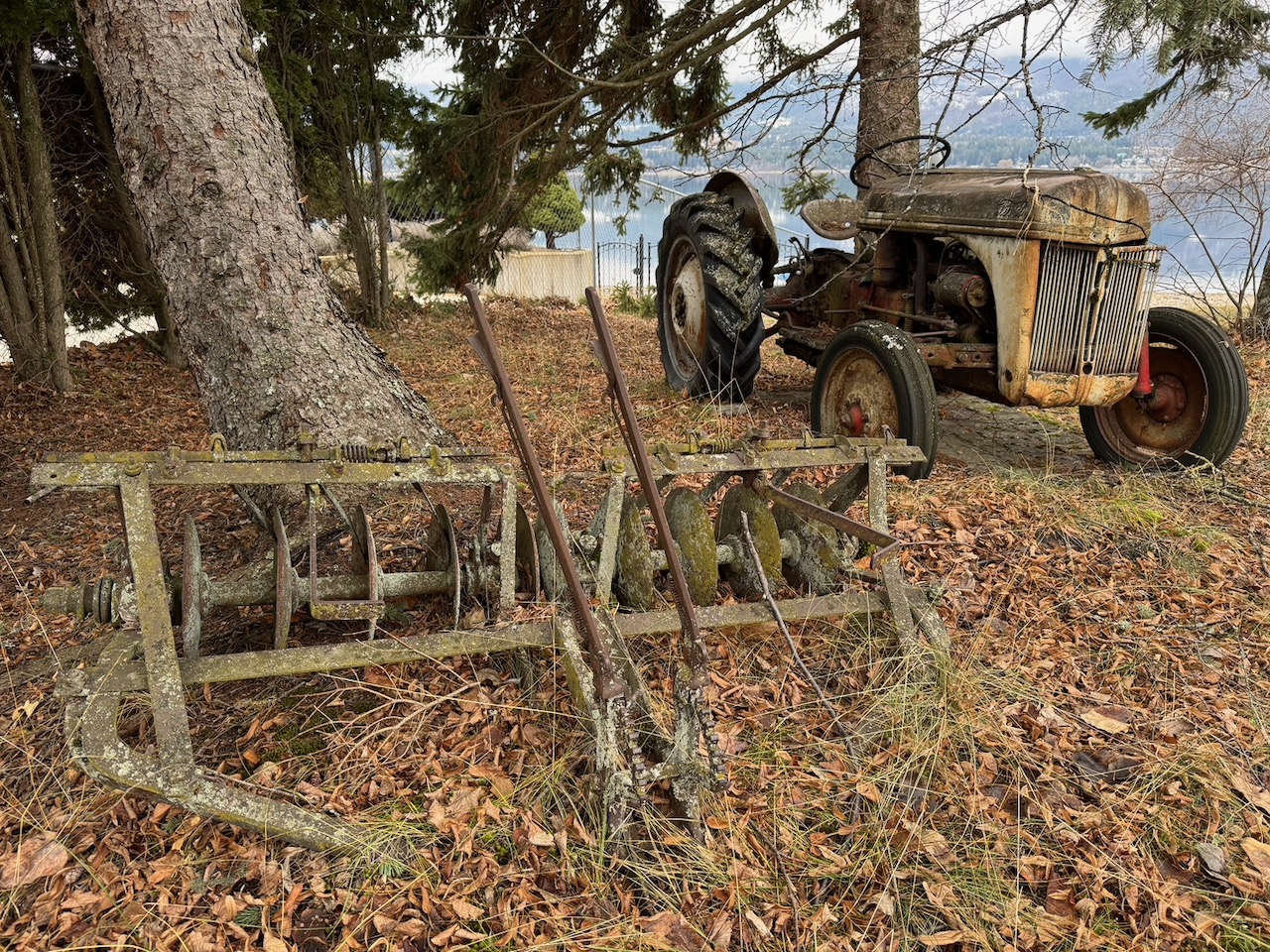
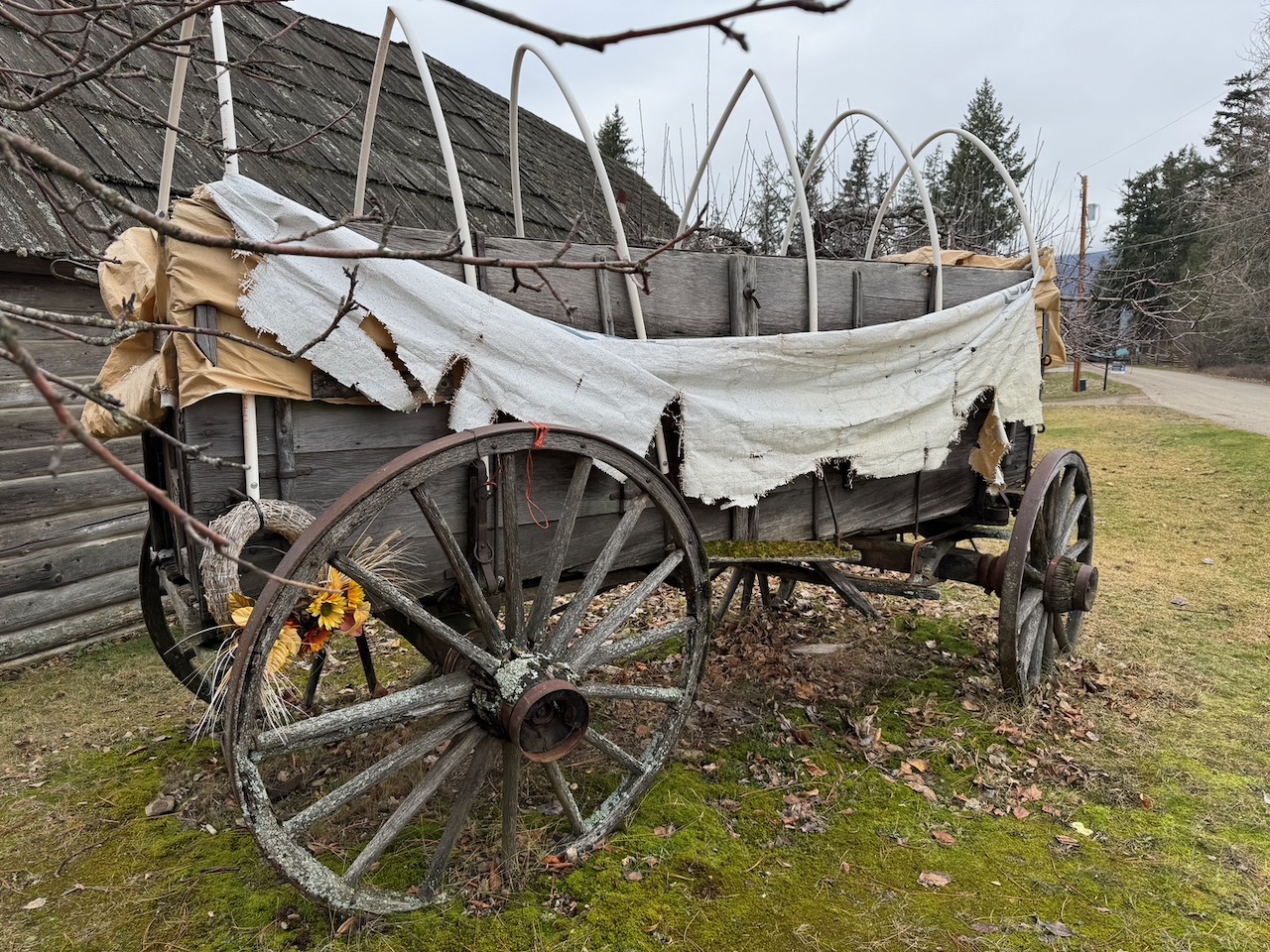
MORE PHOTOS OF THE FARM EQUIPMENT DISPLAYED IN FRONT OF THE GREENOUGH HOME IN SCOTCH CREEK: